Rip currents kill more people along the Texas coast than sharks, jellyfish, and stingrays combined. These powerful channels of water moving away from shore account for more than eighty percent of beach rescues. The danger lies not in the current itself but in the panic that follows when swimmers realize they cannot make progress toward the beach.
Understanding how to read the water before you step in transforms rip currents from invisible killers into recognizable hazards you can avoid or navigate.
What Creates a Rip Current
A rip current forms when water that waves push toward shore needs a path back out. Think of filling a bathtub faster than the drain can handle. The water finds the path of least resistance.
Along the Texas barrier islands, sandbars run parallel to shore just beneath the surface. Waves break over these bars, dumping water into the trough between the bar and the beach. When enough water accumulates, it finds a gap in the sandbar and rushes back through that opening toward deeper water.
The current flows perpendicular to shore through the gap, then spreads out beyond the breaking waves. This creates a river in the ocean, typically ten to thirty feet wide, moving at speeds that can reach five miles per hour. Olympic swimmers average four to five miles per hour in a sprint.
Visual Signatures in the Water
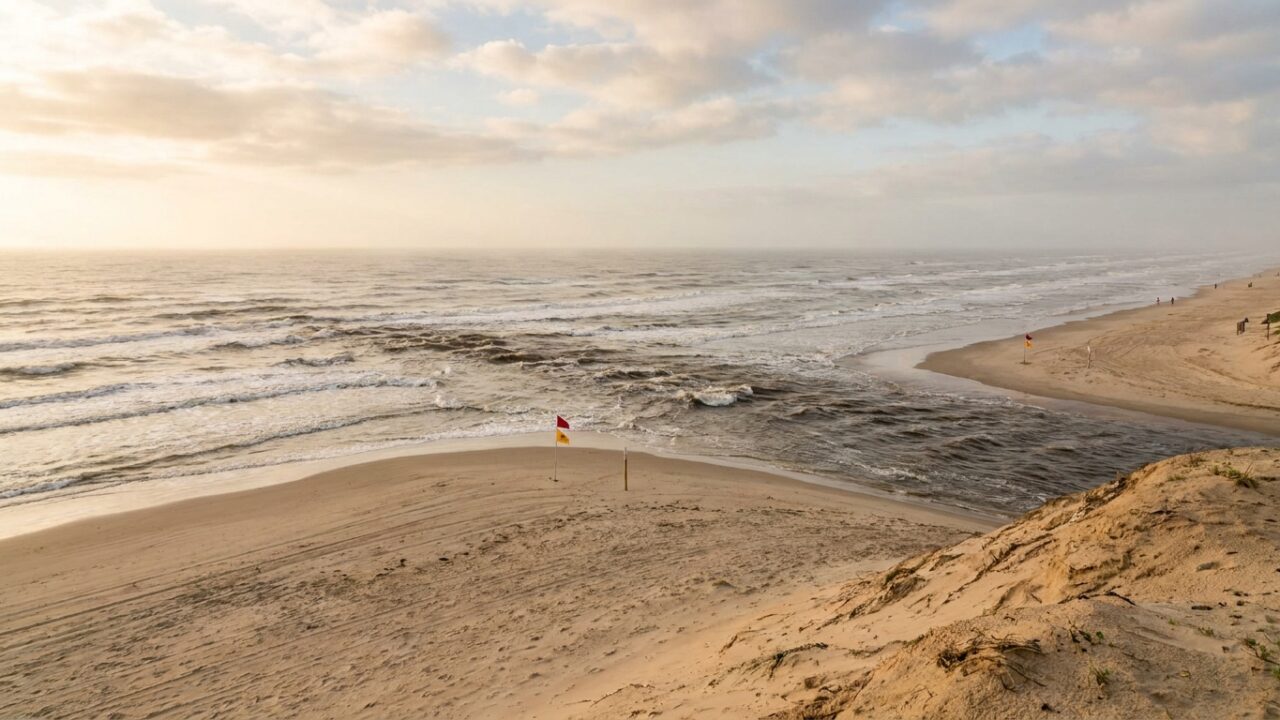
Rip currents leave signatures you can read from shore. The gap in the sandbar that feeds the current appears as a break in the wave pattern. Waves break consistently on either side, but in the rip channel, they look choppy, disorganized, or fail to break at all.
The color difference stands out once you know what to look for. Water in a rip current often appears darker or murkier than surrounding areas because the current stirs up sediment from the bottom. Sometimes the opposite occurs and the water looks clearer or a different shade of blue or green because the channel runs deeper.
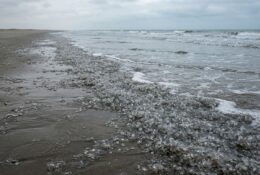
Foam, seaweed, or debris moving steadily seaward reveals an active current. Normal wave action pushes material toward shore or moves it parallel to the beach. Material caught in a rip flows straight out.
The surface texture differs inside a rip current. While adjacent areas show normal wave patterns, the current creates a river-like appearance with a flatter, more turbulent surface that seems to cut through the waves.
Reading Conditions From the Beach
Before you grab your towel and head for the water, spend three minutes watching the surf. Rip currents do not appear everywhere along the beach, and they do not remain stationary.
Scan the surf zone from one end of your beach section to the other. Look for those gaps in the breaking waves. On busy beaches, watch where people are swimming. Experienced beachgoers avoid the gaps and swim where waves break consistently.
Piers, jetties, and groins create permanent rip current locations. These structures interrupt the natural flow of water along the beach, forcing currents to form alongside them. The strongest rips often flow immediately adjacent to these structures.
Wind direction and strength influence rip current behavior. Onshore winds that blow from Gulf to beach can suppress rip formation. Offshore winds or strong alongshore winds increase both the number and strength of rips.
What to Do If You Enter a Rip
The instinct to swim directly toward shore against the current exhausts even strong swimmers within minutes. Fighting the current does not work. The water moves faster than you can swim.
Swim parallel to shore. Because rip currents run narrow, swimming fifty to one hundred feet along the beach moves you out of the channel. Once you exit the current, swim at an angle back toward shore.
If you cannot swim out of the current, float or tread water. Rip currents do not pull you under. They carry you offshore, but they lose strength beyond the breaking waves. The current will release you, usually within fifty to one hundred yards from shore.
Signal for help by waving your arms and yelling. Lifeguards and other beachgoers can reach you faster than you might think, especially if you conserve energy rather than panicking.
Special Conditions Along Texas Beaches
The Texas coast presents unique rip current challenges. Long, straight barrier islands with consistent sandbar formation create predictable rip locations, but wind-driven currents and tidal flows add complexity.
Spring and fall bring the strongest rip conditions. Cold fronts push through every few days, creating larger waves and shifting sandbars. The surf might look manageable, but the underwater topography changes overnight.
Post-storm conditions deserve extra caution even days after the weather clears. Tropical systems and strong fronts reshape the seafloor, creating new channels and gaps where none existed before. The wave pattern you remember from your last visit may not match current conditions.
Pass areas between barrier islands generate permanent rip-like currents. The tidal exchange through these passes creates strong flows that work differently than wave-formed rips but present similar dangers to swimmers.
When Lifeguards Are Not Present
Most Texas beaches lack lifeguard coverage. Port Aransas, Surfside, and a few other locations staff towers during summer months, but the majority of the coastline remains unguarded year-round.
Without professional supervision, you become responsible for your own assessment. If you see the signs of a rip current, choose a different entry point. No swim is worth the risk.
Beach warning flag systems operate at many access points. Red flags mean high hazard conditions with strong surf and currents. Purple flags indicate dangerous marine life. Double red flags close the beach to swimming. These flags reflect actual observed conditions, not theoretical forecasts.
Swimming alone in unguarded areas multiplies the danger. A companion on shore who knows your location and can call for help provides a critical safety margin. That person should stay out of the water and maintain visual contact.
Teaching Others to Recognize Danger
Children cannot reliably identify rip currents or make sound decisions about water entry. They see waves and want to play. Adult supervision means active watching, not reading a book while kids are in the surf.
Point out the visual signatures to your family before anyone enters the water. Show them the gap in the waves, the color difference, the debris moving seaward. Make reading the water part of your beach routine.
Practice the escape technique in calm, shallow water. Have children swim parallel to shore for a set distance, then angle back in. Turn it into a game, but emphasize that this skill matters when conditions change.
The Gulf of Mexico gives clear warnings to those who know the language. Learning to read the water transforms anxiety into informed decision-making and keeps your beach days safe.