Texas offers something rare among American coastlines: the legal right to drive on many of its beaches. But that privilege comes with responsibilities, permits, and a patchwork of rules that vary from island to island. Understanding these requirements before you pack the cooler and air down your tires can mean the difference between a smooth day on the sand and a costly citation or stuck vehicle.
Where You Can and Cannot Drive
Not all Texas beaches allow vehicle access. The 370 miles of Gulf Coast include stretches managed by different authorities, each with distinct regulations. Padre Island National Seashore permits driving on much of its 60-mile length, while certain sections remain closed to protect nesting sea turtles and sensitive dune systems. Mustang Island and North Padre Island beaches near Port Aransas generally allow driving, though access points and seasonal restrictions apply.
Galveston Island maintains several drive-on beach areas, but the city designates vehicle-free zones during peak summer months. South Padre Island restricts driving to specific areas, with much of the developed beachfront reserved for pedestrians. Matagorda Peninsula permits vehicles on certain sections, while Brazos Island and Boca Chica Beach have varying access depending on federal and state activities.
Posted signs mark where vehicles can enter and exit. Ignoring these boundaries risks fines starting at several hundred dollars and potential vehicle impoundment. Protected bird nesting areas, marked with string fencing and warning signs, carry especially steep penalties for violations.
Required Permits and Where to Get Them
Padre Island National Seashore requires no permit for driving on the first five miles of beach accessible from the north end. Beyond that point, venturing onto the more remote stretches toward the Mansfield Channel demands a backcountry permit, available at the Malaquite Visitor Center. These permits cost a nominal fee and require drivers to watch a safety video covering soft sand navigation, tide awareness, and wildlife protection.
Nueces County issues permits for driving on county-managed portions of beaches near Port Aransas and North Padre Island. These permits can be purchased online or at local vendors and typically remain valid for a calendar year. Daily permits are also available for occasional beach drivers.
Galveston requires a Beach Parking Permit for vehicles on the sand between October and March. From April through September, the city charges daily fees at attended beach entrances. Payment stations accept credit cards, and rangers patrol regularly to check compliance.
Some beaches collect fees at attended entry ramps rather than requiring advance permits. Rates vary but generally range from ten to fifteen dollars per vehicle. Keep your receipt visible on your dashboard, as enforcement officers will check.
Vehicle Requirements and Recommendations
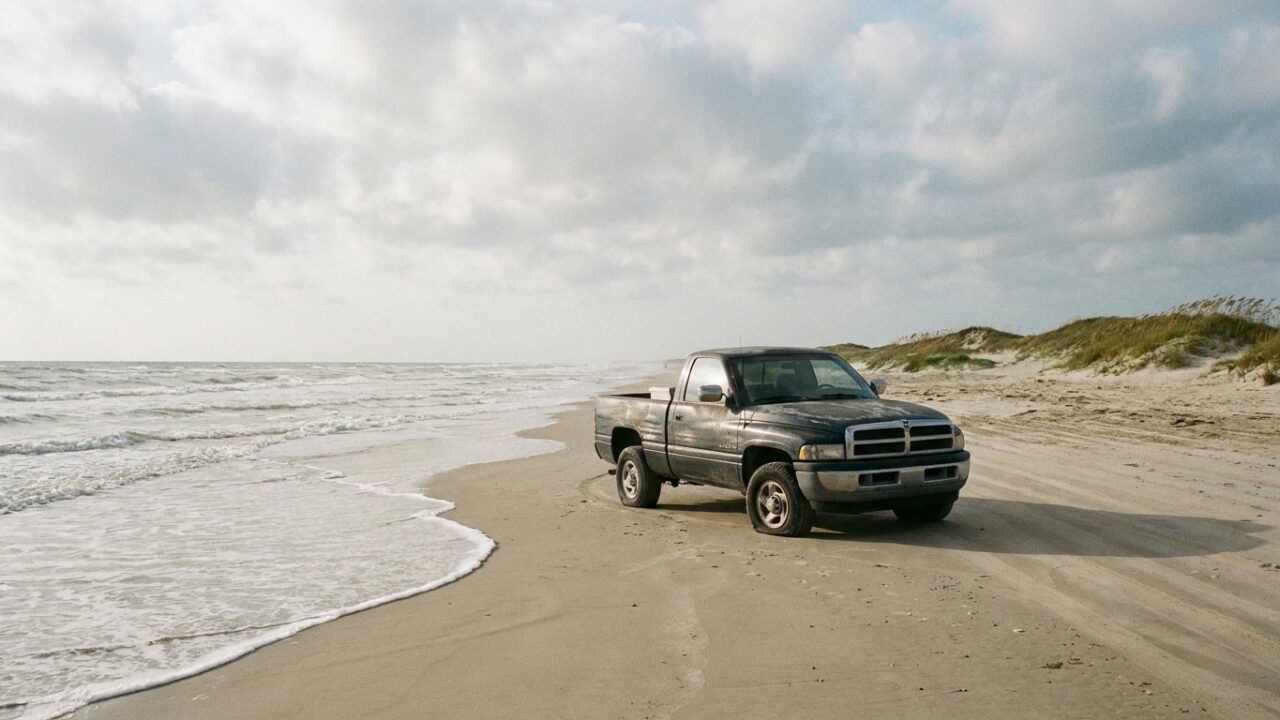
Four-wheel drive is not legally required on most Texas beaches, but it becomes practically essential once you leave the hard-packed sand near the waterline. Two-wheel-drive vehicles regularly bog down in soft sand above the high tide line, requiring expensive extraction by tow services that charge premium rates for beach recovery.
Proper tire pressure makes the difference between floating over sand and digging in. Most experienced beach drivers deflate to fifteen to twenty pounds per square inch before entering the sand, then reinflate before returning to pavement. Carry a reliable air compressor and pressure gauge. Portable models that run from a vehicle’s twelve-volt outlet work well, though they take longer than the high-volume compressors serious off-roaders use.
Recovery gear matters. A tow strap rated for your vehicle’s weight, a shovel, and traction boards can save hours of waiting for help. Some drivers carry lengths of carpet or plywood for the same purpose. A full-size spare tire properly inflated remains essential, as beach driving increases puncture risk from shells, driftwood, and debris.
Driving Rules and Restrictions
Speed limits on Texas beaches typically range from fifteen to twenty-five miles per hour, though specific areas may impose lower limits. These speeds exist for good reason: beachgoers on foot, children playing, and wildlife all share the space. Visibility over dunes and around parked vehicles remains limited.
Standard traffic laws apply on beaches, including prohibitions against driving under the influence. Law enforcement patrols beaches, especially during holidays and summer weekends. Officers can and do issue citations for speeding, reckless driving, and alcohol-related offenses.
Parking on vegetation, including dune grasses, is prohibited across all Texas beaches. These plants stabilize dunes and provide habitat. Violators face fines and possible civil liability for restoration costs. Park only on bare sand below the dune line, and never block emergency vehicle access.
Night driving restrictions exist in many areas, particularly during sea turtle nesting season from April through July. Artificial lights disorient hatchlings, leading them away from the Gulf. Some beaches prohibit driving entirely after dark during these months, while others require headlights off or restricted to parking lights only when stopped.
Seasonal and Wildlife Considerations
Sea turtle nesting season brings the strictest regulations. Kemp’s ridley sea turtles, the world’s most endangered sea turtle species, nest primarily on Texas beaches. Protected nesting areas close to all human activity, including driving, and these closures receive serious enforcement. Disturbing a nest, even accidentally, violates federal law under the Endangered Species Act.
Shorebird nesting also affects beach driving access. Least terns, Wilson’s plovers, and snowy plovers nest directly on sand above the high tide line from April into August. Biologists mark active nesting areas with symbolic fencing. Give these areas wide berth. The birds return to the same locations year after year, and repeated disturbance causes nest abandonment.
Winter months bring different challenges. Cold fronts push high tides farther up the beach, narrowing the drivable area. What seemed like a safe parking spot can become surrounded by water during a tide change. Check tide charts before heading out, and monitor weather forecasts for approaching fronts that may raise water levels unexpectedly.
Getting Unstuck and Emergency Contacts
When a vehicle bogs down in soft sand, resist the urge to accelerate. Spinning tires dig deeper. Instead, stop immediately, assess the situation, and deflate tires further if you haven’t already reached optimal pressure. Clear sand from around the tires, place traction aids under the drive wheels, and attempt gentle forward or reverse movement.
If self-recovery fails, commercial tow services operate along most accessible Texas beaches. Costs range from two hundred to five hundred dollars or more, depending on how stuck the vehicle is and how difficult the extraction. Some drivers arrange towing insurance that covers sand recovery, though standard policies often exclude off-pavement incidents.
Emergency services respond to beaches, but access can be slow depending on location. Cell phone coverage varies, with remote stretches of Padre Island National Seashore having little to no signal. Carry a first aid kit, extra water, and sun protection. Let someone know your plans before heading to isolated beach areas.
Respecting the Resource
Beach driving permits come with an implicit responsibility to preserve what makes these places special. Pack out all trash, including fishing line, which entangles birds and sea turtles. Human waste requires the same leave-no-trace practices used in backcountry camping when facilities aren’t available. Bury it well above the high tide line, away from public areas.
The beaches belong to everyone. Yield to pedestrians, give families with children plenty of space, and keep noise levels reasonable. What feels like freedom to one person becomes a nuisance to someone seeking peace on the same stretch of sand.
Rules evolve as coastal ecosystems face new pressures and as usage patterns change. Check current regulations with local authorities before each trip rather than relying on outdated information. The Texas Parks and Wildlife Department, National Park Service, and county authorities maintain updated guidelines on their websites and at visitor centers. The beaches will be here for future generations only if current users drive responsibly and follow the rules designed to protect them.