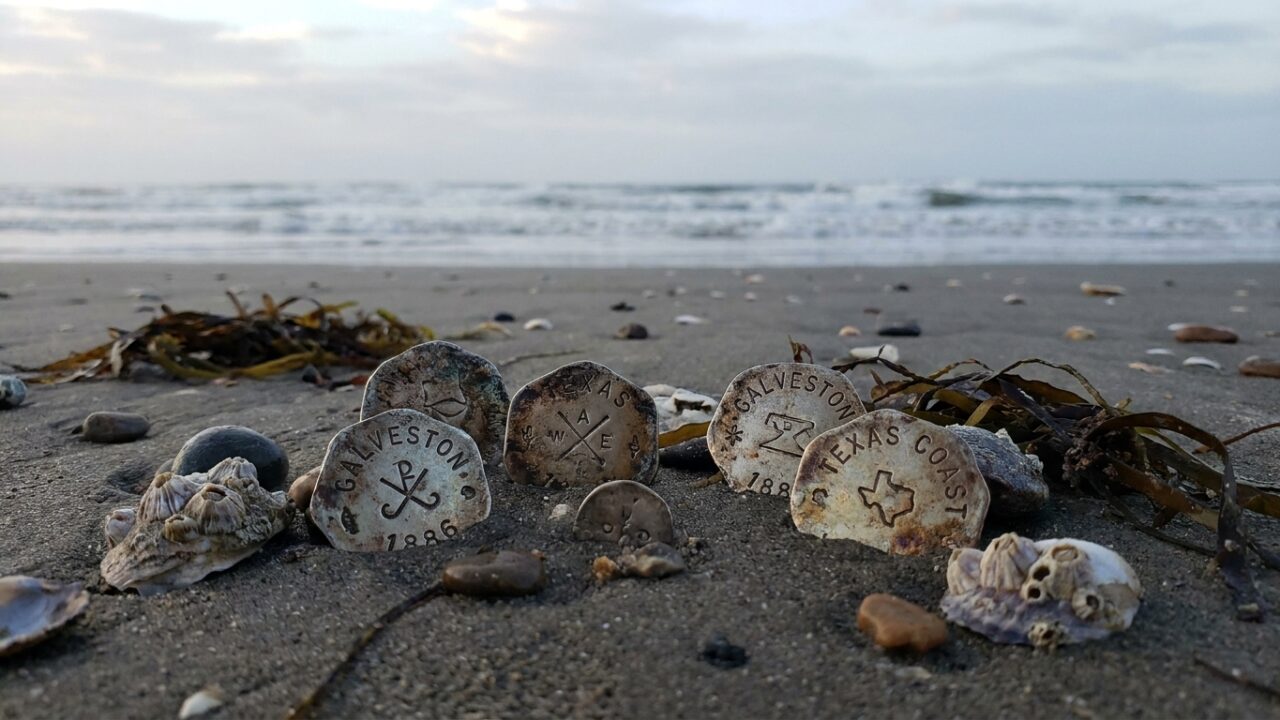
Beachcombers walking the shoreline along the Texas Gulf Coast have begun discovering peculiar handmade metal objects that resemble coins. These items, distinctly different from actual currency or typical beach debris, feature irregular edges, hand-stamped markings, and a crafted appearance that suggests intentional creation rather than industrial manufacturing.
The tokens have been reported on several barrier island beaches, including stretches near Port Aransas, Mustang Island, and Padre Island. Unlike the usual assortment of shells, driftwood, and occasional plastic debris that characterizes Texas beach finds, these metal pieces stand out for their deliberate construction and mysterious purpose.
What the Objects Look Like
According to beachcombers who have encountered them, the handmade pieces vary in size but generally measure between one and two inches in diameter. Most appear to be fashioned from copper, brass, or other non-precious metals that have developed patina from salt water exposure. The surfaces typically bear hand-stamped impressions, symbols, or crude lettering that differs from piece to piece.
The irregular edges and visible hammer marks indicate these objects were shaped by hand rather than machine-pressed like genuine currency. Some feature holes punched through the center, suggesting they may have been intended as pendants or tags rather than actual coins. The varying degrees of oxidation and marine growth on different specimens suggest they entered the water at different times.
Metal detector enthusiasts report finding these items both on the surface and buried several inches in the sand, particularly in areas where storm surge or high tides have recently redistributed beach material.
Possible Origins and Theories
The appearance of handcrafted metal tokens on beaches is not entirely unprecedented, but the concentration of finds along Texas shores has generated speculation about their source. Several theories have emerged among the beachcombing community.
One possibility involves artistic or commemorative pieces intentionally released into the ocean. Some artisans and environmental groups have been known to create tokens as part of awareness campaigns or artistic installations, though no organization has claimed responsibility for these particular items.
Another explanation centers on maritime history. The Texas coast has centuries of seafaring heritage, and sailors historically crafted makeshift tokens, tallies, or personal markers during long voyages. However, the relatively fresh appearance of many specimens suggests more recent origins rather than historical artifacts.
The items could also represent remnants from offshore operations. Oil platforms, fishing vessels, and research ships all maintain equipment that might include metal tags or improvised markers that could be lost overboard and eventually wash ashore.
Geocaching and Intentional Placement
Some beachcombers have suggested the tokens might be connected to geocaching or similar recreational tracking activities. Participants in these games sometimes create custom tokens or trackable items designed to move from location to location. The Gulf waters could conceivably carry such items from drop points to distant beaches.
However, most geocache tokens feature identifying codes or website references that allow finders to log their discovery online. The lack of such markings on most of the Texas beach finds weakens this explanation.
What to Do if You Find One
Beach visitors who encounter these unusual metal pieces should handle them carefully. While the objects appear harmless, any beach find should be rinsed with fresh water if taken home to remove salt that accelerates corrosion.
Documenting the location where items are found helps establish patterns. Taking a photo with GPS coordinates and noting the date provides valuable information for anyone attempting to trace the source. Several online beachcombing communities welcome reports of unusual finds, and posting details there may connect your discovery to similar finds elsewhere.
Anyone discovering items bearing legible text, numbers, or symbols should note these details. Even partial markings might provide clues to origin or purpose that individual finders might not immediately recognize.
If the objects appear to be historical artifacts rather than recent creations, contacting the Texas Historical Commission ensures proper documentation. The state has protocols for handling maritime archaeological materials, and beaches regularly yield items of historical significance.
The Broader Context of Texas Beach Finds
Texas barrier island beaches serve as collection zones for an enormous variety of materials transported by Gulf currents. The same hydrodynamic forces that concentrate shells and tar balls in particular areas also gather denser materials including metal objects.
Storm events dramatically increase the variety and quantity of items deposited on beaches. Hurricane activity, even storms that remain far offshore, generates wave action that stirs bottom sediments and moves materials that might otherwise remain submerged. The spring and summer months typically bring more beachcombers who then notice unusual items.
Metal detecting remains a popular activity along Texas beaches, particularly after storms. Practitioners regularly recover coins, jewelry, fishing equipment, and occasional surprises. The handmade tokens represent an unusual category that has captured attention precisely because they fit no familiar pattern.
Environmental Considerations
Any increase in metal objects on beaches raises questions about pollution and marine debris. While handcrafted tokens differ from typical refuse, their presence still represents foreign material in the coastal environment. Metals corrode in salt water, releasing compounds into sand and water.
Texas beaches already contend with significant debris challenges. Plastic waste, fishing gear, and materials from maritime commerce regularly wash ashore. Communities along the coast organize regular beach cleanups to address this ongoing issue. Whether the metal tokens constitute pollution depends largely on their source and how many enter the environment.
What Remains Unknown
Despite speculation, no definitive explanation has emerged for the handmade tokens appearing on Texas beaches. No artist or organization has claimed them as an intentional project. No maritime operation has reported losing tagged equipment that matches their description. Historical records provide no clear precedent for similar items.
The tokens continue to appear, suggesting an ongoing source rather than a one-time spill or loss. Whether they originate from Texas waters, arrive from more distant locations via Gulf currents, or represent multiple separate sources remains unclear.
Beachcombers interested in solving the mystery can contribute by reporting finds with specific location data and clear photographs. Pattern analysis requires multiple data points, and crowdsourced information from beach visitors could reveal distribution patterns that point toward an origin.
For now, the handmade coins remain one more puzzle along a coastline that regularly surprises those who walk its shifting sands. The Texas Gulf shore has always been a place where ocean and land exchange materials, stories, and occasional mysteries.