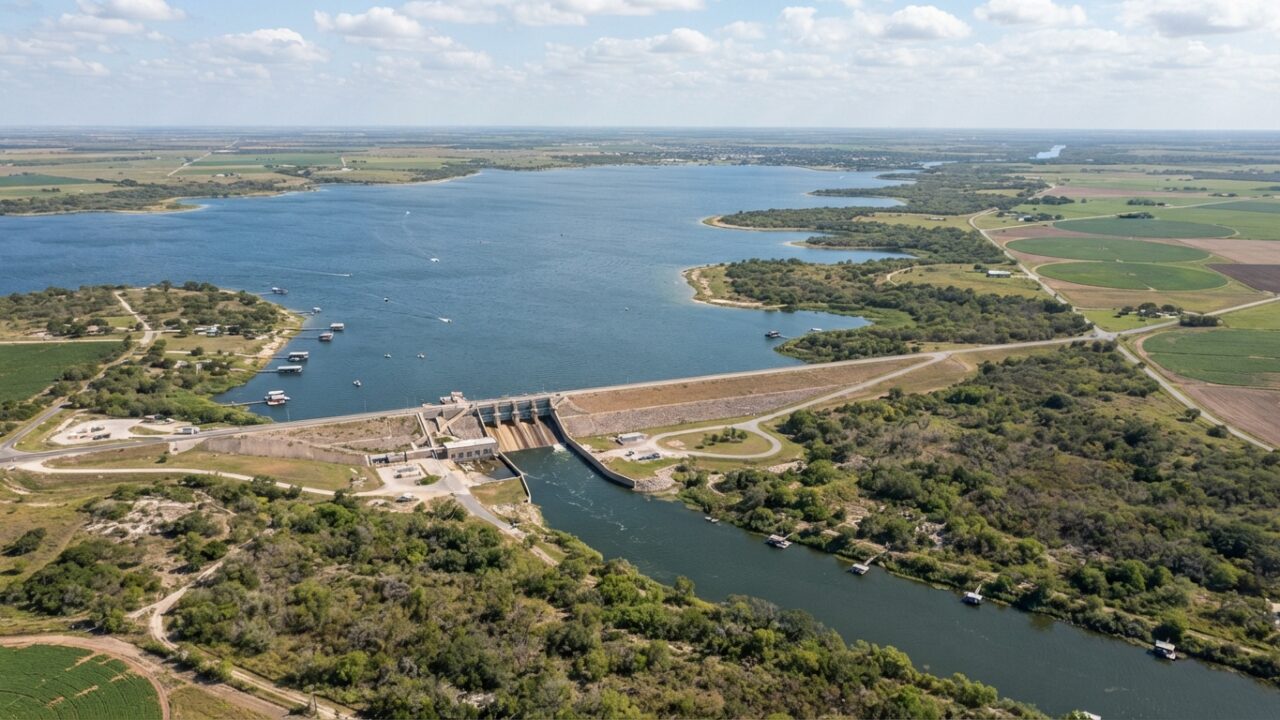
Texas water regulators halted releases from Lake Corpus Christi this week through an emergency order, suspending flows that typically reach downstream agricultural users and coastal estuaries. The Texas Commission on Environmental Quality issued the directive following disputes over water rights allocations along the Nueces River system.
The emergency measure directly impacts water availability for irrigation districts, municipal users, and environmental flows that support coastal ecosystems around Corpus Christi Bay and surrounding barrier islands. Lake Corpus Christi, located approximately 35 miles northwest of the city, serves as a primary water source for the region’s half-million residents and supports industries from agriculture to tourism.
Water Rights Disputes Along the Nueces
The suspension stems from competing claims over water rights dating back decades along the Nueces River watershed. Multiple permit holders downstream from the lake have contested release schedules, arguing that current operations violate established water rights hierarchies under Texas law.
The Nueces River Authority, which operates the Wesley E. Seale Dam forming Lake Corpus Christi, has managed releases based on permit conditions that balance municipal supply, agricultural demand, and environmental requirements. However, senior water rights holders maintain that current release patterns infringe on their legally protected allocations during drought conditions.
Texas water law operates on a complex priority system where older rights generally receive preference during shortages. The emergency order effectively freezes the status quo while regulators review competing claims and determine appropriate release schedules that comply with all valid permits.
Implications for Coastal Ecosystems
Environmental flows from Lake Corpus Christi contribute to the health of downstream estuaries, including Nueces Bay and portions of the Laguna Madre system. These releases help maintain salinity balances critical for fish nurseries, oyster reefs, and bird habitat throughout the coastal bend region.
Reduced freshwater inflows can increase salinity levels in bays and estuaries, potentially stressing species adapted to brackish conditions. Redfish, speckled trout, and flounder populations that support recreational fishing industries depend on proper salinity gradients maintained partly through reservoir releases.
Whooping cranes wintering at Aransas National Wildlife Refuge northeast of Corpus Christi rely on blue crab populations sensitive to salinity changes. While Lake Corpus Christi releases represent only one component of total freshwater inflows to the system, prolonged disruptions could affect food availability for these endangered birds.
Agricultural and Municipal Concerns
Irrigation districts downstream from the lake utilize water releases for crops including cotton, grain sorghum, and vegetables grown in the Coastal Bend region. The emergency suspension leaves these users dependent on alternative sources or stored supplies from previous allocations.
Municipal water systems drawing from the Nueces River or Lake Corpus Christi itself face potential impacts if the suspension extends through summer months when demand peaks. The City of Corpus Christi maintains multiple water sources, including the lake, Choke Canyon Reservoir on the Frio River, and desalination capacity, providing some buffer against short-term disruptions.
Water utilities serving Port Aransas, Rockport, and other coastal communities receive treated water through regional systems ultimately dependent on these reservoir supplies. Any prolonged reduction in available water could trigger conservation measures or increased reliance on groundwater sources.
Recreation and Tourism Effects
Lake Corpus Christi State Park attracts anglers, boaters, and campers year-round, with lake levels and water quality directly affected by management decisions. While the emergency order addresses releases rather than lake operations, ongoing disputes over water allocation create uncertainty for recreation-dependent businesses.
Boat ramps, marinas, and fishing guides operating on the lake depend on predictable water levels and access. Previous drought periods have forced ramp closures and limited lake access when levels dropped below operational thresholds.
Downstream on the Nueces River, kayakers and paddlers utilize stretches between the lake and Corpus Christi Bay, with flows directly tied to release schedules. Reduced releases can concentrate pollutants and increase water temperatures, affecting both recreation quality and aquatic life.
Regulatory Process and Timeline
The Texas Commission on Environmental Quality will review water rights claims from all parties before determining whether to modify, extend, or lift the emergency order. This process typically involves technical analysis of permit conditions, hydrological modeling, and legal review of competing rights.
Parties affected by the order can submit comments and supporting documentation during the review period. The commission must balance legal requirements under state water law against practical considerations including economic impacts and environmental needs.
Previous water rights disputes along Texas rivers have taken months or years to resolve, particularly when drought conditions limit available supplies and intensify competition among users. The emergency nature of the current order suggests regulators identified immediate compliance concerns requiring swift action.
Drought Context and Long-Term Planning
The Coastal Bend region continues recovering from multi-year drought conditions that depleted reservoir storage across South Texas. Lake Corpus Christi and Choke Canyon Reservoir both experienced historic lows in recent years, prompting mandatory conservation measures and highlighting vulnerabilities in regional water supply.
Climate projections suggest increased variability in precipitation patterns, with more intense droughts interspersed with heavy rainfall events. These conditions complicate water management decisions and intensify conflicts among competing users with limited supplies.
Regional water planning efforts aim to diversify sources and improve drought resilience through expanded desalination, aquifer storage and recovery projects, and enhanced conservation programs. However, these long-term solutions require years to implement and substantial capital investment.
What Remains Uncertain
The duration of the emergency suspension remains unclear, with regulators providing no specific timeline for resolution. Water users throughout the Nueces River system await guidance on how the order will affect their operations in coming weeks and months.
Whether the commission will impose permanent modifications to release schedules or permit conditions depends on findings from the ongoing review. Any changes could reshape water availability for municipal, agricultural, and environmental purposes throughout the watershed.
Monitoring continues for impacts on coastal bay systems, with salinity levels and biological indicators providing early warning of ecological stress from altered freshwater inflows.