A recent roundup from WorldAtlas puts the spotlight on nine Gulf Coast towns that often fly under the radar of beachgoers who stick to the busiest stretches of sand between Texas and the Florida Panhandle. For travelers based around Port Aransas and the Coastal Bend, the list offers a starting point for exploring communities that share similar maritime DNA but bring their own character to the Gulf experience.
The list includes towns scattered across four states, each shaped by its proximity to saltwater but marked by different histories, industries, and approaches to tourism. Some lean hard into fishing heritage, others into historic preservation or wildlife access. What they share is a claim to authentic coastal life beyond the high-rise resort model.
Texas Entries on the List
Port Isabel makes the WorldAtlas selection, positioned near the southern tip of Texas along the Laguna Madre. The town serves as a gateway to South Padre Island but maintains its own identity as a working waterfront with historic sites including a lighthouse built in 1852. Fishing charters and shrimping operations give the harbor a functional edge that contrasts with the resort development visible across the causeway.
The inclusion of Port Isabel reflects a broader pattern along the Texas coast where smaller towns anchor the mainland side of barrier island tourism. Port Aransas occupies a similar position in relation to Corpus Christi, offering direct beach access without the urban density. These mainland-island pairings create a regional geography where travelers choose between convenience, quiet, and the type of coastal experience they want.
Florida Panhandle Communities
The list highlights several Florida Panhandle locations including Apalachicola, a town built on oyster harvesting and a historic downtown that has drawn preservation attention. The Apalachicola Bay system produces a significant portion of Florida’s oyster harvest, though the industry has faced challenges from hurricanes, freshwater management disputes, and disease pressure in recent years.
Cedar Key also appears on the list, located on Florida’s Nature Coast where the Gulf shoreline turns from sandy beaches to marshes and oyster bars. The town sits on an island accessible by a short causeway and has built a low-key tourism economy around fishing, birdwatching, and seafood restaurants. The surrounding Cedar Keys National Wildlife Refuge protects nesting colonies of wading birds across thirteen islands.
These Florida towns occupy a different ecological zone than the Texas barrier islands. The coastline curves and the Gulf floor drops more gradually, creating extensive shallow flats and marsh systems that support different fisheries and wildlife patterns. For Texas-based travelers, the shift in landscape offers a useful comparison point for understanding how Gulf Coast ecosystems vary along the arc from Brownsville to Key West.
Louisiana and Mississippi Selections
Ocean Springs, Mississippi, earns a spot for its arts community and access to the Gulf Islands National Seashore. The town has rebuilt its downtown following Hurricane Katrina, with galleries and studios anchoring a cultural scene that distinguishes it from casino-focused neighbors. The nearby barrier islands offer undeveloped beach stretches reachable by boat, appealing to visitors seeking solitude and wildlife observation over amenities.
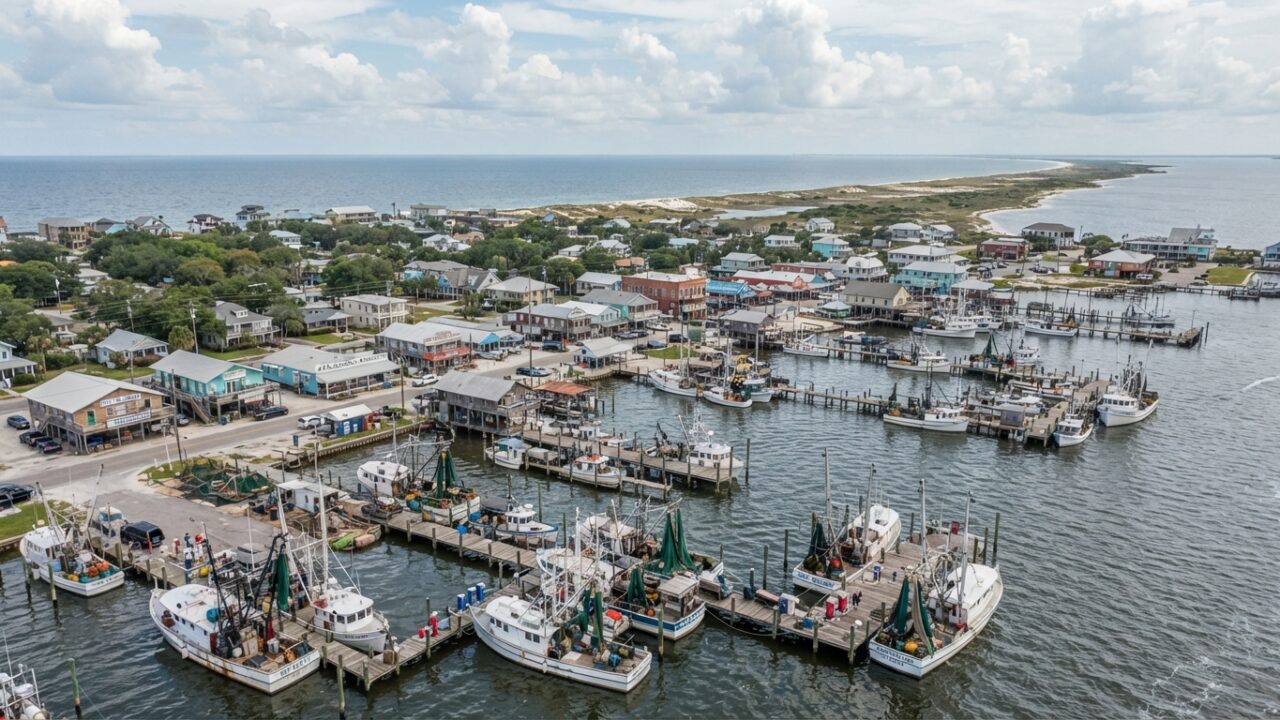
Grand Isle, Louisiana, represents the Pelican State as a barrier island community accessible by highway. The island extends into the Gulf south of New Orleans and serves as a fishing base for both recreational and commercial operations. Grand Isle suffered direct hits from multiple hurricanes in recent years, including Ida in 2021, raising ongoing questions about infrastructure investment and the future of permanent settlement on Louisiana’s eroding coastal margins.
What the List Reveals About Gulf Tourism
The WorldAtlas selection reflects a shift in how coastal destinations market themselves, emphasizing authenticity and local character over resort-style development. This approach aligns with trends visible around Port Aransas, where vacation rental growth and new construction coexist with efforts to maintain fishing industry presence and protect nesting shorebirds.
Each town on the list navigates the tension between tourism revenue and the preservation of the working waterfront culture that gives these places their appeal. Commercial fishing fleets, shrimp boats, and fish houses provide visual markers of authenticity but require harbor space, processing facilities, and tolerance for industrial aesthetics that can conflict with residential development and tourism expectations.
Practical Considerations for Road Trips
Visiting multiple Gulf Coast towns requires planning around distance and highway quality. The drive from Port Aransas to Port Isabel covers roughly two hundred miles down the Texas coast, manageable as a day trip or weekend excursion. Reaching the Florida Panhandle from the Coastal Bend means crossing Louisiana, a journey of eight to ten hours depending on the destination.
Seasonal timing matters for these trips. Summer brings peak heat and humidity across the Gulf, along with afternoon thunderstorms and higher lodging costs. Spring and fall offer milder weather and better birdwatching, particularly during migration periods when coastal corridors concentrate warblers, raptors, and shorebirds. Winter provides the least crowded conditions but also the highest risk of cold fronts that can make beaches uncomfortable and shut down some outdoor activities.
Hurricane season runs from June through November across the Gulf, with peak activity in August and September. Travelers planning trips during this window should monitor forecasts and understand cancellation policies. Coastal towns experience storm impacts unevenly, with some rebuilding quickly and others facing long recovery periods that affect lodging availability and infrastructure.
Gear That Crosses Regions
Equipment that performs well on Texas barrier islands generally translates to other Gulf Coast environments. Wading boots, polarized sunglasses, and sun protection remain essential across the region. Fishing tackle adapts to local species but follows similar principles, with speckled trout, redfish, and flounder present in bays and surf zones from Texas through Florida.
The shift from sandy beaches to marshy coastlines in Louisiana and parts of Florida may require adjustments. Kayaks and shallow-draft boats access areas unreachable by foot, and insect protection becomes more critical in marsh environments. Birding optics prove valuable across all nine destinations, as each town offers access to distinct habitats that support resident and migratory species.
What Stays Local
Despite shared Gulf Coast characteristics, each town maintains local knowledge that outsiders need time to acquire. Fishing guides understand seasonal patterns, productive structures, and tide effects specific to their home waters. Restaurant menus reflect regional seafood availability and preparation traditions that vary by state and cultural influence. Even beach etiquette shifts between towns, with some enforcing strict rules about vehicles on sand while others allow driving in designated zones.
The WorldAtlas list provides a framework for exploration but cannot substitute for ground-level familiarity. Coastal towns reveal themselves slowly, through conversations at bait shops, observations at boat ramps, and hours spent watching how light changes over different stretches of water. For travelers from Port Aransas, these nine destinations offer variations on familiar themes, each worth visiting not for radical difference but for the subtle ways they interpret shared Gulf Coast realities.