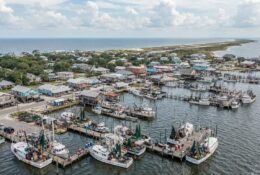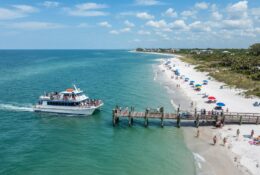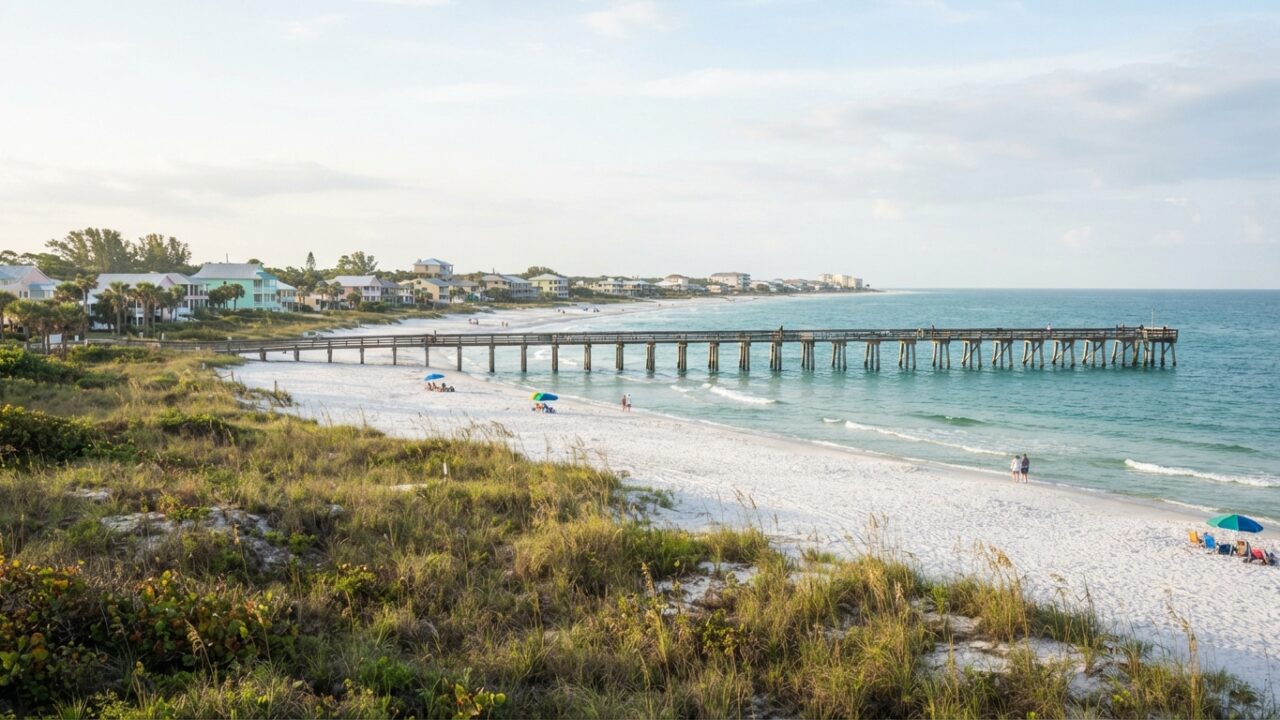
Port Aransas regulars seeking something beyond familiar Texas shorelines might want to look eastward. Alabama’s Gulf Coast communities are drawing attention as alternatives to more crowded destinations, offering similar coastal ecosystems with noticeably fewer visitors during peak seasons.
The comparison matters for anyone who remembers what Gulf Coast beaches felt like before every weekend brought parking lot overflow. These Alabama towns maintain the rhythm of authentic fishing villages while providing the amenities modern travelers expect.
What Makes Alabama’s Coast Different
The Alabama coastline stretches just 53 miles compared to Texas’s 367, creating a fundamentally different dynamic. Towns remain compact and walkable. Development pressure exists but hasn’t yet transformed every waterfront block into high-rise condos.
The barrier island system here mirrors what we know from Mustang Island and San Jose Island. Sugar-white sand formed from Appalachian quartz creates beaches that feel different underfoot than Texas sand. The water clarity often exceeds what we see on Padre Island, particularly after calm weather when visibility extends several feet down.
Gulf Shores anchors the region as the largest community, but maintains a population under 15,000 permanent residents. Orange Beach sits immediately east, separated more by municipal boundaries than any real geographic divide. Both towns invested heavily in public beach access over the past two decades, creating the kind of walkover infrastructure that Texas beach communities are still debating.
Fairhope and the Eastern Shore Experience
Fairhope sits across Mobile Bay rather than on the Gulf itself, but the town deserves attention for anyone interested in coastal culture beyond pure beach access. This artisan community of roughly 22,000 built its identity around public waterfront space, organic farming roots, and a genuinely walkable downtown.
The public pier extends into Mobile Bay where fishing remains productive year-round. Speckled trout, redfish, and flounder move through these waters following the same patterns familiar to Texas coastal anglers. Tackle shops stock similar gear to what works in Aransas Bay, though locals swear by certain color variations in soft plastics.
Downtown Fairhope’s gallery concentration rivals any coastal art scene in Texas. More than thirty galleries and studios operate within a six-block radius, most representing regional artists working with coastal themes. Prices reflect a market less inflated than comparable Gulf resort towns.
Bay Fishing Access Points
Beyond Fairhope’s main pier, the Eastern Shore offers multiple bay access points worth noting. Weeks Bay National Estuarine Research Reserve protects 6,000 acres of wetlands and provides kayak launch facilities. The reserve’s fish nursery function mirrors the role that Texas estuaries play, supporting juvenile populations of commercially important species.
Public boat ramps remain free or charge minimal fees, contrasting sharply with premium launch fees now common at Texas coastal facilities. Trailer parking presents fewer challenges, with most ramps maintaining adequate space even during summer weekends.
Dauphin Island’s Research Legacy
Dauphin Island anchors Alabama’s western coastal end, separated from the mainland by three miles of bridge and causeway. The island stretches fourteen miles long and never exceeds two miles wide, creating an intimate scale that disappeared from Padre Island decades ago.
What sets Dauphin Island apart is the presence of the Dauphin Island Sea Lab, Alabama’s marine science consortium. The facility conducts research comparable to what happens at University of Texas Marine Science Institute in Port Aransas, but with greater public accessibility. The estuarium welcomes visitors daily, offering close looks at local marine species without aquarium artificiality.
The island’s eastern end remains undeveloped, preserved as Audubon sanctuary. During spring and fall migration, birders document species counts that rival South Padre Island’s famous concentrations. Neotropical migrants funnel through this Gulf crossing point, creating conditions where thirty species in a morning represents normal rather than exceptional.
Fort Gaines and Maritime History
Fort Gaines occupies Dauphin Island’s eastern tip, a brick fortification that defended Mobile Bay during the Civil War. The site offers context for understanding Gulf Coast strategic importance that shaped regional development. Guided tours run daily during summer months, less frequently in shoulder seasons.
The fort’s seawall provides fishing access where structure attracts sheepshead, black drum, and seasonal cobia. Anglers fishing here use techniques identical to those productive around Texas jetties, though local regulations differ in specific size and bag limits.
Orange Beach Inlet and Deep Water Access
Orange Beach’s defining feature is Perdido Pass, where Perdido Bay meets the Gulf through a federally maintained channel. The inlet supports a charter fishing fleet comparable in size to Port Aransas, targeting the same offshore species: red snapper, grouper, amberjack, and king mackerel.
Charter pricing runs slightly lower than Texas Gulf equivalents, with full-day offshore trips starting around $150 per person compared to $180-200 in Port Aransas. Boat conditions and captain experience vary as they do anywhere, making research and reviews essential.
The pass itself creates strong current ideal for sight-casting to jack crevalle, ladyfish, and Spanish mackerel. Anglers wade the adjacent beaches using identical approaches that work along Mustang Island: walking spoons, topwater plugs at dawn, and cut bait for larger predators.
Coastal Wetland Systems
Behind Orange Beach’s developed beachfront, extensive wetland systems connect to the larger Gulf watershed. Weeks Bay, Wolf Bay, and Terry Cove create nursery habitat supporting the same species complexes found in Texas bays. Paddlers can explore miles of protected waterways where wading birds outnumber boats.
These back bay systems face development pressure but remain largely intact compared to heavily altered Texas estuaries. Water quality monitoring shows cleaner conditions than many Texas bays, though nutrient loading from upstream agricultural areas presents ongoing challenges.
Planning Considerations for Texas Visitors
The drive from Port Aransas to Gulf Shores covers roughly 650 miles, manageable as a ten-hour push or comfortable two-day drive. Interstate 10 provides the main route, passing through Houston, Beaumont, and coastal Louisiana before reaching Alabama.
Accommodation costs in Alabama beach towns run comparable to Port Aransas during peak season, with beachfront condos averaging $200-300 nightly in summer. Shoulder season rates drop significantly, with April, May, and October offering warm weather and reduced crowds at 30-40% discounts.
Hurricane season runs identical to Texas timing, with peak risk August through October. Alabama’s coast takes direct hits less frequently than upper Texas coast but remains vulnerable to major storms. Trip insurance makes sense for any Gulf Coast beach booking during late summer.
What Remains Uncertain
Alabama’s coastal towns sit at a crossroads between preservation and growth. Development proposals surface regularly, testing the balance between economic expansion and maintaining the uncrowded character that currently distinguishes these communities. Whether towns can sustain low-density appeal while accommodating visitor growth remains the open question facing any Gulf Coast destination.
For now, these Alabama communities offer what Port Aransas provided decades ago: genuine coastal culture, accessible fishing, and beaches where finding solitude requires minimal effort. That window won’t stay open indefinitely.