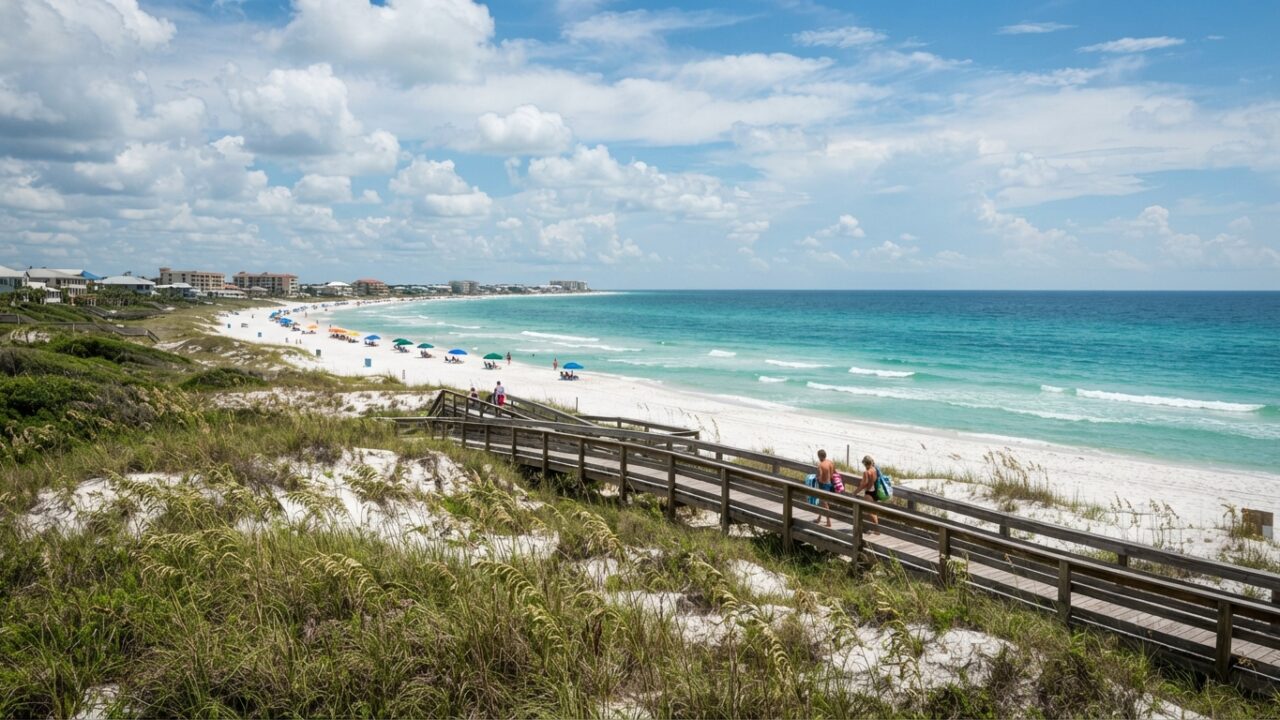
Texas coastal visitors facing recent beach health advisories are discovering alternative Gulf destinations, with Florida’s Emerald Coast emerging as a practical three-day weekend option. The region stretches along the Florida Panhandle, offering similar white sand beaches and coastal experiences without requiring extensive travel from Gulf Coast departure points.
The Emerald Coast designation refers to the distinctive turquoise waters along Northwest Florida’s shoreline, where the continental shelf drops more gradually than along other Gulf sections. This geography creates the characteristic clear, emerald-green water that gives the region its name and distinguishes it from the typically brown or gray waters common along the Texas coast.
Geographic Advantages for Port Aransas Travelers
From Port Aransas, the drive to the western edge of Florida’s Emerald Coast represents approximately 650 miles, or roughly ten hours of driving time. This positions destinations like Pensacola and Fort Walton Beach within reasonable reach for a long weekend departure, particularly for travelers willing to drive Friday afternoon and return Monday evening.
The route follows Interstate 10 eastward through Houston and across Louisiana before entering Florida. Unlike the direct coastal Highway 87 route that dead-ends at Cameron, Louisiana, the I-10 corridor provides reliable all-weather access year-round.
Small towns along this coastline offer alternatives to the concentrated tourism of destinations like Destin or Panama City Beach. These communities typically feature historic downtown districts, local seafood establishments, and beach access without the high-rise development that characterizes larger resort areas.
Seasonal Timing and Weather Patterns
Spring represents the optimal season for Emerald Coast visits from a Texas perspective. Water temperatures climb into the mid-70s by late April, while summer’s intense humidity and afternoon thunderstorms remain weeks away. The spring break crowds that overwhelm Panama City Beach typically bypass smaller communities entirely.
The Emerald Coast shares the same Gulf of Mexico hurricane exposure as Texas barrier islands, with the season running June through November. Historical patterns show the Florida Panhandle faces different storm trajectories than South Texas, with most hurricanes approaching from the southeast rather than the southwest.
Water quality along the Emerald Coast generally surpasses Texas beaches due to clearer water and less riverine sediment. The major rivers entering the Gulf in this region—the Choctawhatchee, Yellow, and Blackwater—carry less agricultural runoff than Texas waterways, though bacterial advisories can still occur following heavy rainfall.
Comparing Gulf Coast Beach Experiences
The sand composition differs markedly between regions. Emerald Coast beaches feature fine quartz sand that remains cool underfoot even in direct sunlight, contrasting with the coarser, darker sand common along Texas shores. This quartz sand originates from Appalachian Mountains erosion, transported coastward over millennia.
Beach access follows different patterns as well. While Texas maintains extensive public beach access under the Open Beaches Act, Florida employs a mixed system where some beaches require parking fees or remain restricted to nearby residents. Visitors planning Emerald Coast trips should research specific access points rather than assuming unrestricted entry.
The coastal ecosystem presents both similarities and differences. Both regions support nesting sea turtles during summer months, requiring nighttime lighting restrictions. However, the Emerald Coast harbors different fish species and coastal birds adapted to its clearer waters and different salinity patterns.
Tourism Infrastructure Considerations
Small Emerald Coast towns typically offer limited accommodation inventory compared to Texas coastal destinations. Travelers should book lodging well in advance, particularly for spring and summer weekends. Vacation rental properties dominate the market, with traditional hotels concentrated in larger towns.
Restaurant options skew heavily toward seafood, as expected in coastal communities. The culinary style differs from Texas coastal cuisine, with more emphasis on fried grouper sandwiches and oyster preparations than the fried shrimp and blackened redfish common in Port Aransas establishments.
Fishing opportunities attract many visitors, though licensing requirements differ. Florida requires separate licenses for saltwater fishing, unlike Texas where a single license covers both fresh and saltwater. Charter operations abound, targeting species like red snapper, amberjack, and king mackerel depending on season.
Cost Analysis for Weekend Trips
Fuel costs for the round-trip journey from Port Aransas to the Emerald Coast typically range from $120 to $180 depending on vehicle efficiency and current gas prices. This represents a significant expense but remains comparable to airfare for two people when factoring in rental car needs at a fly-in destination.
Accommodation rates in small Emerald Coast towns generally run higher than Port Aransas equivalents, particularly during peak season. Two-night weekend stays commonly start at $300 for basic properties, climbing to $600 or more for beachfront locations. Vacation rentals often impose three-night minimums during summer.
Dining costs align roughly with Texas coastal pricing, though some establishments carry premium charges reflecting the tourist market. Groceries cost slightly more than Texas averages, making self-catering an economical choice for budget-conscious travelers.
Alternative Destinations Remain Available
The recent attention to Emerald Coast small towns reflects broader patterns in Gulf Coast tourism. When one region experiences challenges—whether health advisories, storm damage, or overcrowding—travelers naturally explore alternatives along the 1,680-mile Gulf shoreline.
Louisiana coastal communities offer closer options for Port Aransas visitors, though many remain in rebuilding mode following recent hurricane seasons. Grand Isle and other Cajun Country beach towns provide different cultural experiences without the extended drive time Florida requires.
Mississippi’s Gulf Coast presents another middle-distance alternative, with Biloxi and Ocean Springs accessible in seven to eight hours. These destinations combine beach access with casino entertainment and historic neighborhoods, creating a different vacation profile than pure beach towns.
Whether Texas beach conditions improve in coming weeks or visitors choose eastern Gulf alternatives, the fundamental appeal remains consistent: warm water, sandy shores, and the coastal lifestyle that draws people to barrier islands and beach communities throughout the region. The Emerald Coast represents one option among many for Gulf Coast residents seeking variety in their beach experiences.