
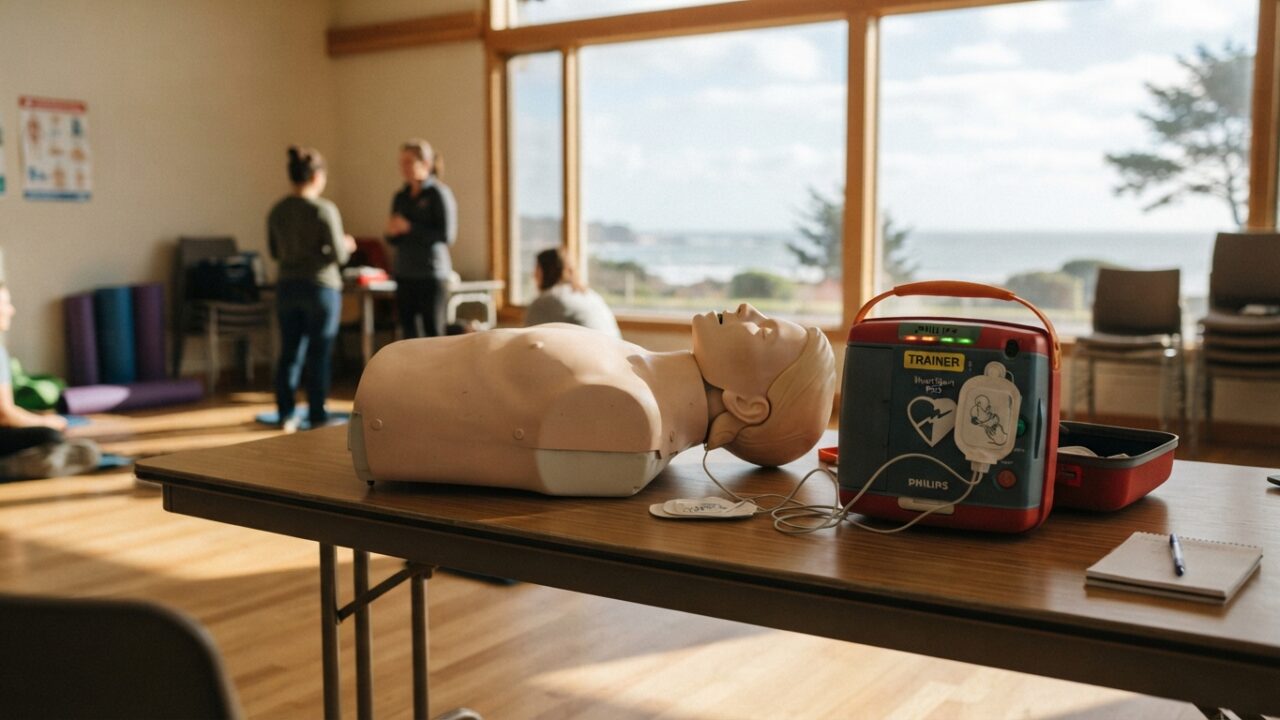
Families across Corpus Christi received hands-on training in two critical techniques that dramatically improve survival chances during cardiac arrest: immediate chest compressions and proper use of automated external defibrillators. The community training sessions reflect growing recognition that bystander intervention in the crucial minutes before emergency responders arrive often determines whether someone lives or dies.
The two-step approach emphasizes simplicity over complexity. First, call 911. Second, begin chest compressions immediately and continue until help arrives or an AED becomes available. This streamlined protocol removes barriers that previously prevented bystanders from acting, including fears about performing rescue breathing or causing additional harm.
Why Coastal Communities Face Unique Challenges
Cardiac emergencies in coastal areas like Corpus Christi present distinct challenges compared to urban centers. Response times can stretch longer when incidents occur on barrier islands, fishing piers, or remote beach access points. The Port Aransas ferry system, while efficient, adds minutes to emergency transport that victims cannot afford to lose.
Temperature extremes common along the Texas Gulf Coast also elevate cardiac risk. Summer heat indices frequently exceed 105 degrees, placing additional strain on cardiovascular systems already compromised by underlying conditions. Older residents and tourists unaccustomed to the climate face heightened vulnerability during peak season months when beaches draw maximum crowds.
The distance factor becomes even more pronounced for anglers on offshore vessels or kayakers exploring the Laguna Madre. Once someone experiences cardiac arrest, brain damage begins within four to six minutes without oxygenated blood flow. Even the fastest Coast Guard response cannot reliably reach a patient within that window, making bystander CPR the only realistic chance for survival in many scenarios.
Breaking Down the Two-Step Protocol
The training sessions focused on hands-only CPR, a technique requiring no mouth-to-mouth contact. Participants learned to position their hands at the center of the chest, lock their elbows, and compress at least two inches deep at a rate of 100 to 120 compressions per minute. Instructors often reference the tempo of songs like “Stayin’ Alive” to help people maintain the correct rhythm.
Traditional CPR training included rescue breathing, which many people found intimidating or unsanitary. Studies over the past decade demonstrated that continuous chest compressions alone produce survival outcomes equal to or better than compression-plus-breathing combinations for adult cardiac arrest victims. This finding revolutionized public training by eliminating the most psychologically difficult barrier to intervention.
The second component involves automated external defibrillators, devices increasingly common in public spaces throughout Corpus Christi. Modern AEDs walk users through each step with voice prompts and will only deliver a shock when the device detects a shockable rhythm. The machines eliminate guesswork and cannot harm someone whose heart maintains normal electrical activity.
Where to Find AEDs Along the Coast
Public access to AEDs has expanded significantly across Corpus Christi and surrounding coastal communities. Most beach access points now include AED stations marked with distinctive red and white signage. The devices also appear in marina facilities, bait shops, hotel lobbies, and larger charter fishing operations.
Padre Island National Seashore maintains AEDs at visitor centers and ranger stations, though coverage across the park’s 70 miles of coastline remains limited by the sheer geographic scope. Beach visitors venturing into remote sections should understand that AED access may require significant travel time.
Private marinas around Port Aransas and Rockport have increasingly invested in AED placement following several high-profile cardiac incidents involving anglers and boaters. Some charter captains now carry portable units aboard larger vessels, recognizing that offshore emergencies leave no margin for delay.
Statistical Reality of Cardiac Arrest Survival
National survival rates for out-of-hospital cardiac arrest hover around 10 percent, a sobering statistic that underscores why immediate bystander response matters so profoundly. When bystanders begin CPR before emergency services arrive, survival rates double or triple. Adding AED use within the first few minutes pushes survival chances even higher, sometimes exceeding 50 percent in optimal circumstances.
The American Heart Association estimates that 350,000 cardiac arrests occur outside hospitals annually across the United States. Texas accounts for a proportional share of these incidents, with coastal counties experiencing additional complications from environmental factors and population dispersal patterns that slow professional medical response.
Corpus Christi emergency medical services track response times carefully, but even the most efficient systems face physical limitations. Traffic congestion during tourist season, construction zones along major coastal routes, and the fundamental challenge of reaching barrier islands all contribute to delays that trained bystanders can partially offset through immediate action.
Training Access and Future Sessions
Organizations throughout the Corpus Christi area offer CPR and AED training on regular schedules. The American Heart Association, American Red Cross, and local hospitals all conduct courses ranging from brief awareness sessions to comprehensive certification programs. Some employers in the hospitality and outdoor recreation sectors now require staff members to maintain current CPR certification.
Community centers in neighborhoods across the city have begun hosting free or low-cost training events, removing financial barriers that previously limited participation. These sessions typically last two to three hours and provide hands-on practice with training mannequins and demonstration AED units.
Schools throughout the Coastal Bend region have also incorporated basic cardiac emergency response into health education curricula. Students as young as middle school age can effectively perform chest compressions and operate AEDs, potentially creating a generation of residents prepared to respond when seconds matter most.
What Remains Uncertain
Questions persist about optimal AED placement density in sprawling coastal environments where populations shift dramatically between seasons. Beach communities must balance equipment costs against usage likelihood while ensuring devices remain maintained and accessible year-round despite salt air exposure that can damage electronics.
Ongoing discussions also examine whether boating safety regulations should eventually mandate AED presence on vessels exceeding certain passenger capacities or venturing beyond specified distances from shore. Such requirements would represent significant regulatory expansion but could address documented gaps in offshore emergency response capabilities.
