
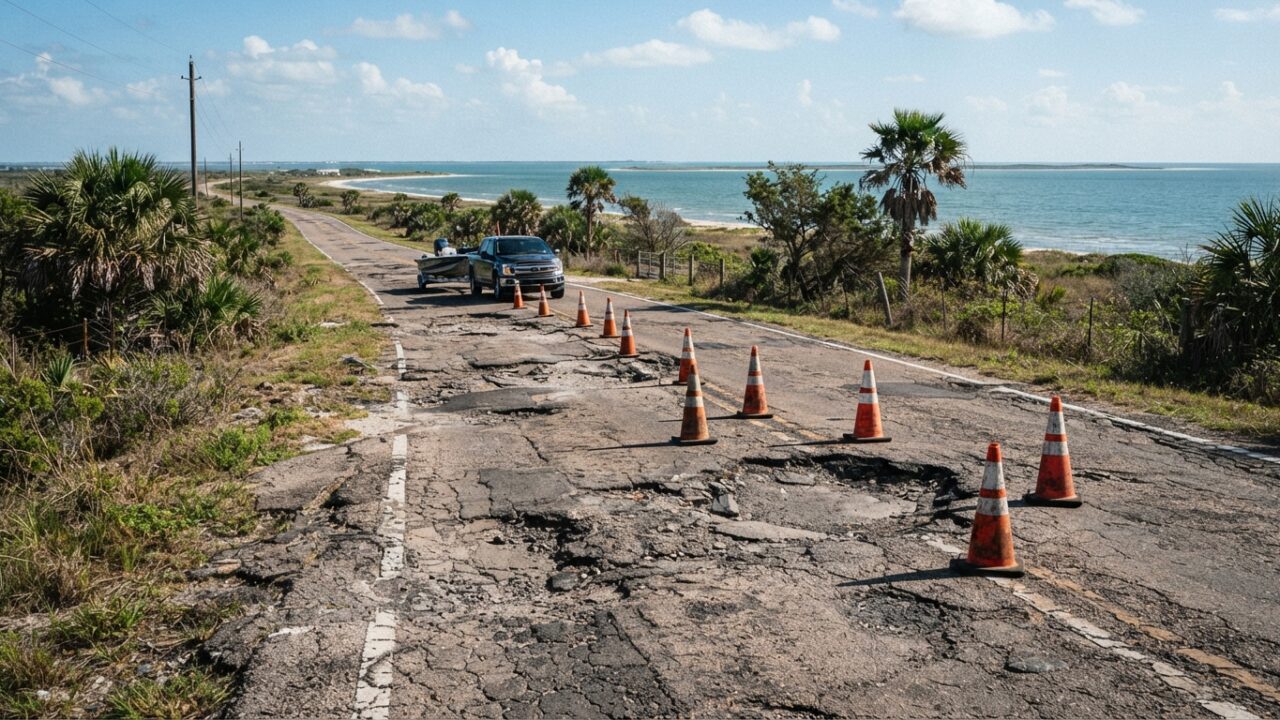
Drivers navigating Corpus Christi streets face a growing challenge as the city’s pothole problem intensifies while funding for street paving decreases. The deteriorating road conditions affect not only daily commuters but also visitors traveling to popular coastal destinations along the Texas barrier islands.
The infrastructure crisis presents particular concerns for travelers hauling boats, beach equipment, and recreational vehicles through the city on their way to Port Aransas and surrounding coastal areas. Damaged roads can cause tire blowouts, alignment issues, and suspension damage that leave tourists stranded or facing expensive repairs far from home.
Budget Constraints Hit Street Maintenance
Corpus Christi’s street paving budget has contracted significantly, forcing the city to prioritize emergency repairs over comprehensive resurfacing projects. The reduction comes as coastal weather patterns and increased traffic volume accelerate road deterioration across the region.
Salt air and humidity unique to Gulf Coast communities compound the infrastructure challenges. Saltwater intrusion weakens road foundations more rapidly than in inland areas, while temperature fluctuations cause expansion and contraction that creates cracks and potholes. Heavy summer tourist traffic and hurricane evacuation patterns place additional stress on roadways designed decades ago for lighter loads.
The funding squeeze means crews focus on filling the most dangerous potholes rather than addressing underlying pavement failures. This reactive approach often results in temporary patches that fail within months, requiring repeated repairs to the same locations.
Key Routes to Coastal Destinations Affected
Several major corridors connecting Corpus Christi to beach communities show significant deterioration. State Highway 361, a primary route to Port Aransas, experiences constant wear from vehicles carrying boats, kayaks, and camping gear. Interstate 37, which funnels travelers from San Antonio toward the coast, requires ongoing maintenance as commercial and recreational traffic increases.
Ocean Drive, popular among tourists for its scenic bayfront views, displays numerous surface failures. The coastal roadway endures constant exposure to salt spray and flooding, accelerating asphalt breakdown. Visitors driving the route to photograph sunrise or access waterfront parks navigate around damaged sections that mar the experience.
Local roads leading to boat launches and beach access points suffer particularly heavy damage. Vehicles towing trailers stress pavement edges, while sand tracked from beaches acts as an abrasive that wears away road surfaces. After major storms, saltwater flooding leaves roads saturated with corrosive brine that penetrates asphalt layers.
Impact on Outdoor Recreation Travel
Deteriorating roads create hazards for outdoor enthusiasts transporting specialized equipment. Boats on trailers become unstable when drivers swerve to avoid potholes, potentially causing accidents or equipment damage. Kayaks and paddleboards secured to roof racks can shift suddenly during evasive maneuvers on damaged pavement.
Bicycle tourists following coastal routes face particular danger from broken pavement. Potholes force cyclists into traffic lanes, while crumbling road shoulders eliminate safe riding space. The deteriorating conditions discourage bicycle touring, impacting visitors who choose Corpus Christi specifically for two-wheeled coastal exploration.
Rental vehicles suffer disproportionate damage from poor road conditions. Tourists unfamiliar with local problem areas lack the knowledge to avoid known hazards, leading to flat tires and wheel damage. Rental companies report increased maintenance costs and shorter vehicle lifespans for cars stationed in coastal markets.
Seasonal Patterns Worsen Conditions
Spring Break and summer vacation seasons bring peak traffic volumes when road conditions are often at their worst. Winter storms and freeze events create new damage that goes unrepaired before tourist season begins. By the time summer crowds arrive, roads display months of accumulated deterioration.
Hurricane season preparations further complicate maintenance schedules. Crews prioritize drainage clearing and emergency route improvements over routine paving as storm threats develop. After hurricanes pass, debris removal and utility repairs consume resources that might otherwise fund street work.
Comparison with Other Coastal Communities
Other Texas Gulf Coast cities face similar infrastructure challenges but approach funding differently. Galveston dedicates specific tourism tax revenue to road maintenance along beach access routes, recognizing that quality infrastructure supports the visitor economy. South Padre Island maintains higher paving standards on corridors serving resort districts.
Port Aransas, despite its smaller size, invests heavily in maintaining roads that serve ferry traffic and beach access. The community recognizes that damaged streets create negative impressions among tourists who form opinions about destinations based on arrival experiences.
Florida Gulf Coast communities provide additional comparison points. Cities like Clearwater and Naples maintain extensive road networks serving beach tourism through dedicated funding mechanisms and aggressive preventive maintenance programs.
What Drivers Can Do Now
Travelers heading to Corpus Christi and surrounding coastal areas should take precautions to minimize vehicle damage. Checking tire pressure before trips helps tires withstand impacts from potholes. Ensuring proper inflation also improves fuel economy during beach driving.
Reducing speed on unfamiliar roads provides more reaction time when potholes appear. The temptation to rush toward beach destinations leads drivers to hit hazards they might otherwise avoid. Allowing extra travel time reduces pressure to maintain speeds unsuitable for road conditions.
Maintaining greater following distances prevents the common scenario where drivers suddenly brake or swerve ahead, forcing trailing vehicles into potholes without warning. The extra space provides visibility to spot hazards early.
Local knowledge becomes valuable for repeat visitors. Note problem areas encountered during trips and choose alternate routes on return visits. Sharing information with other travelers through social media or review sites helps the broader community avoid damage.
Long-Term Infrastructure Questions
The deteriorating situation raises questions about sustainable funding models for coastal road infrastructure. Tourism-dependent communities must balance maintenance needs against other budget priorities while recognizing that poor roads ultimately discourage the visitors who drive economic activity.
Climate change projections suggest increasingly severe storms and higher sea levels will further stress coastal infrastructure. Roads built to historical standards may prove inadequate for future conditions, requiring not just maintenance but fundamental redesign and elevation.
The current trajectory suggests conditions will worsen before improvement occurs. Without funding increases or new revenue sources, the gap between maintenance needs and available resources continues widening. Travelers planning coastal trips should prepare for challenging road conditions throughout the region.
