
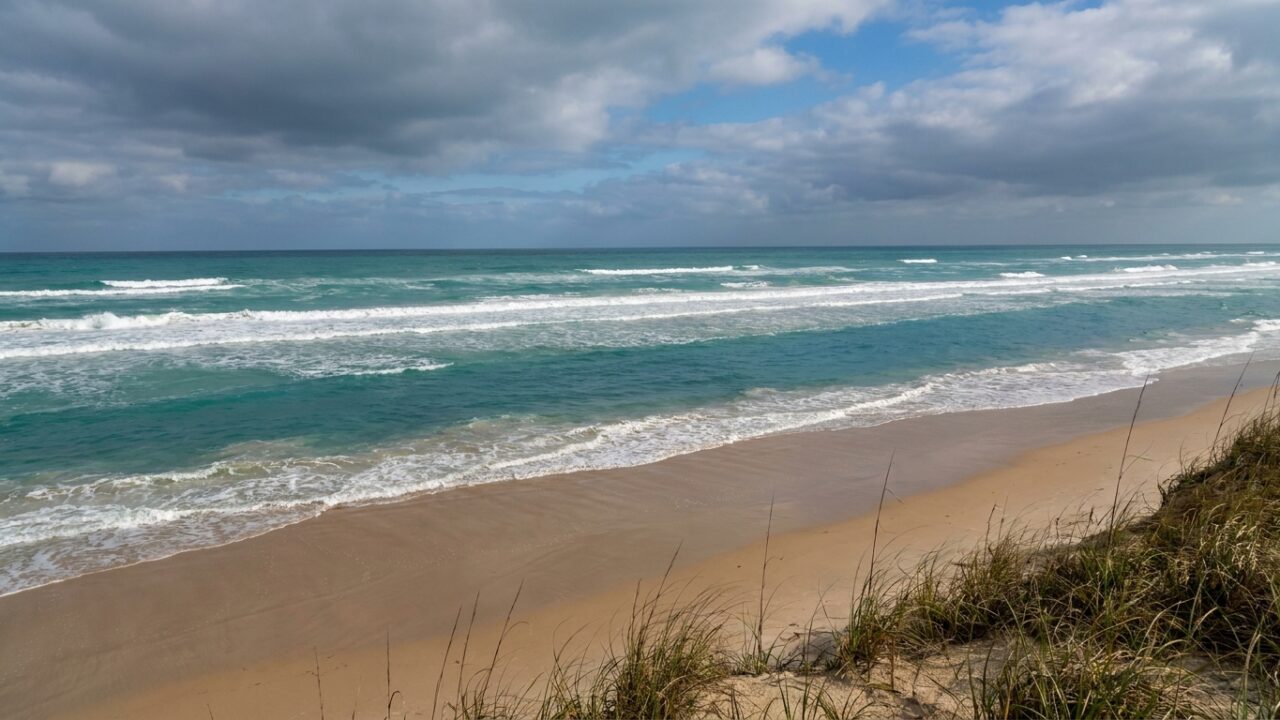
The Gulf of Mexico looks deceptively calm on most summer mornings. Families spread towels across Mustang Island, children build sandcastles near the waterline, and swimmers wade into water barely above their knees. Yet beneath that placid surface, narrow channels of water rush seaward at speeds faster than an Olympic swimmer can maintain. These rip currents account for more than eighty percent of beach rescues along the Texas coast.
Understanding how to identify these currents before stepping into the surf transforms ocean swimming from a gamble into a calculated decision. The water itself broadcasts warnings, but most beachgoers never learned the language.
What Creates Rip Currents on Barrier Islands
Waves carry water toward shore continuously. That water must return to the Gulf, and it finds the path of least resistance through breaks in sandbars. These channels funnel accumulated water seaward in concentrated rivers that can stretch fifty to one hundred feet wide.
Texas barrier islands create ideal conditions for rip current formation. The gradual slope of the seafloor, the perpendicular angle at which waves typically strike the beach, and the shifting sandbars all contribute to their frequency. Unlike permanent features such as jetties or piers that generate predictable currents in fixed locations, sandbars shift with storms and tides. A safe swimming area one week may harbor a powerful rip the next.
The strength of these currents varies throughout the day. Spring tides bring stronger flows than neap tides. Wind direction matters significantly. An onshore breeze stacks more water against the beach, intensifying the seaward rush through gaps. After several days of strong Gulf winds, rip currents multiply and strengthen across every beach from South Padre Island to Galveston.
Reading the Surface Before You Enter
Rip currents announce themselves to anyone who knows what to look for. The most reliable indicator appears as a gap in the wave pattern. Waves break consistently across most of the beach, but rip channels show noticeably calmer water or smaller waves. This deceptively peaceful appearance draws inexperienced swimmers directly into danger.
Color offers another clue. Rip currents often appear darker than surrounding water because they flow over deeper channels where sandbars have eroded. Conversely, they sometimes look murkier or foamier because they carry suspended sand and debris seaward. The key lies in recognizing any visual difference in a discrete channel extending perpendicular to shore.
Watch the foam and floating debris. Seaweed, driftwood, or foam lines that travel steadily seaward mark the current’s path. Stand on the beach for three minutes and track these objects. If they move consistently away from shore rather than washing back and forth with waves, you have identified a rip.
The width of the surf zone provides additional information. Where waves break far from shore across a wide area, sandbars lie relatively shallow and intact. Where waves break close to the beach with a narrow surf zone, deeper channels likely exist nearby.
Conditions That Amplify Risk
Certain weather patterns deserve extra caution. The day after a cold front passes through Port Aransas, northerly winds often create exceptionally strong rip currents along east-facing beaches. The same applies during the backside of tropical systems, even those that made landfall hundreds of miles away.
High surf advisories from the National Weather Service signal elevated risk. These advisories get issued when wave heights exceed four feet or when dangerous currents develop. Beach flags posted by local authorities follow a universal color code: red means high hazard with strong currents, yellow indicates moderate hazard, and purple warns of marine life such as jellyfish.
Pay attention to recent rainfall and river discharge. After heavy rain, outflows from the Aransas Pass or other inlets can create current patterns that behave differently than typical rip currents. These hybrid currents may run parallel to shore before turning seaward, confusing swimmers who expect a simple offshore flow.
Testing the Water Safely
Before committing to a swim, wade in only to knee depth and feel the current against your legs. A strong pull or notable sideways drift indicates powerful currents. This simple test costs nothing and reveals conditions no amount of observation from the beach can match.
Enter the water near other swimmers but not in the exact same spot. Families often cluster together, and if one person gets caught in a rip, everyone nearby faces the same danger. Spread out along the beach by thirty or forty feet while maintaining visual contact.
Swim parallel to the shore rather than straight out. This pattern lets you feel whether currents are pushing you sideways, which often precedes getting caught in a rip. If you notice yourself drifting consistently in one direction despite swimming perpendicular to that drift, you are likely in or near a current.
What to Do When Caught
The instinct to swim directly back to shore against a rip current leads to exhaustion and panic. Even strong swimmers cannot overpower these flows. Instead, swim parallel to the beach until you exit the narrow channel, then angle back toward shore. Most rip currents measure less than thirty feet wide, so swimming fifty feet along the beach usually brings you into calmer water.
If swimming parallel feels impossible due to fatigue or current strength, float and signal for help. Rip currents dissipate beyond the surf zone, usually within fifty to one hundred yards from shore. The current will carry you out, but it will not pull you under. Conserve energy by floating or treading water until the current weakens, then swim at an angle back to the beach.
Remain calm. Panic accelerates exhaustion. Many rip current drownings occur not because the current was unusually powerful, but because the swimmer exhausted themselves fighting it.
Equipment That Improves Safety
A simple foam pool noodle transforms into a crucial safety tool in the Gulf. These flotation devices cost less than five dollars and provide enough buoyancy to rest without treading water. Slip one under each arm if caught in a current, and you can float indefinitely while waiting for help or for the current to weaken.
Polarized sunglasses cut through surface glare and reveal underwater features that predict current patterns. Sandbars, channels, and color changes in the water become dramatically clearer. This visibility advantage matters most during the scouting phase before entering the water.
A dive flag or brightly colored cap makes you visible to beach patrol and other swimmers. If you need help, being seen quickly can mean the difference between a simple rescue and a desperate search.
Teaching Children to Recognize Danger
Children gravitate toward the calmest-looking water, which often marks the most dangerous spots. Teach them to look for breaking waves and to swim only where white water crashes consistently. Make a game of spotting the differences in wave patterns before anyone enters the water.
Practice floating in a pool before ocean swimming. Children who know they can rest by floating are less likely to panic if they drift farther from shore than intended. This skill alone prevents many potential emergencies.
Establish a landmark on the beach and check it frequently. A tall building, a lifeguard stand, or a distinctive dune provides a fixed reference point. If that landmark moves significantly relative to your position, you are drifting in a current and need to adjust your location.
The Gulf of Mexico offers some of the most accessible and enjoyable coastal swimming in North America. The same sandbars and gentle slope that create comfortable wading conditions also generate the currents that demand respect. Learning to read the water before swimming does not diminish the experience. It makes every swim safer and every beach day more confident.
