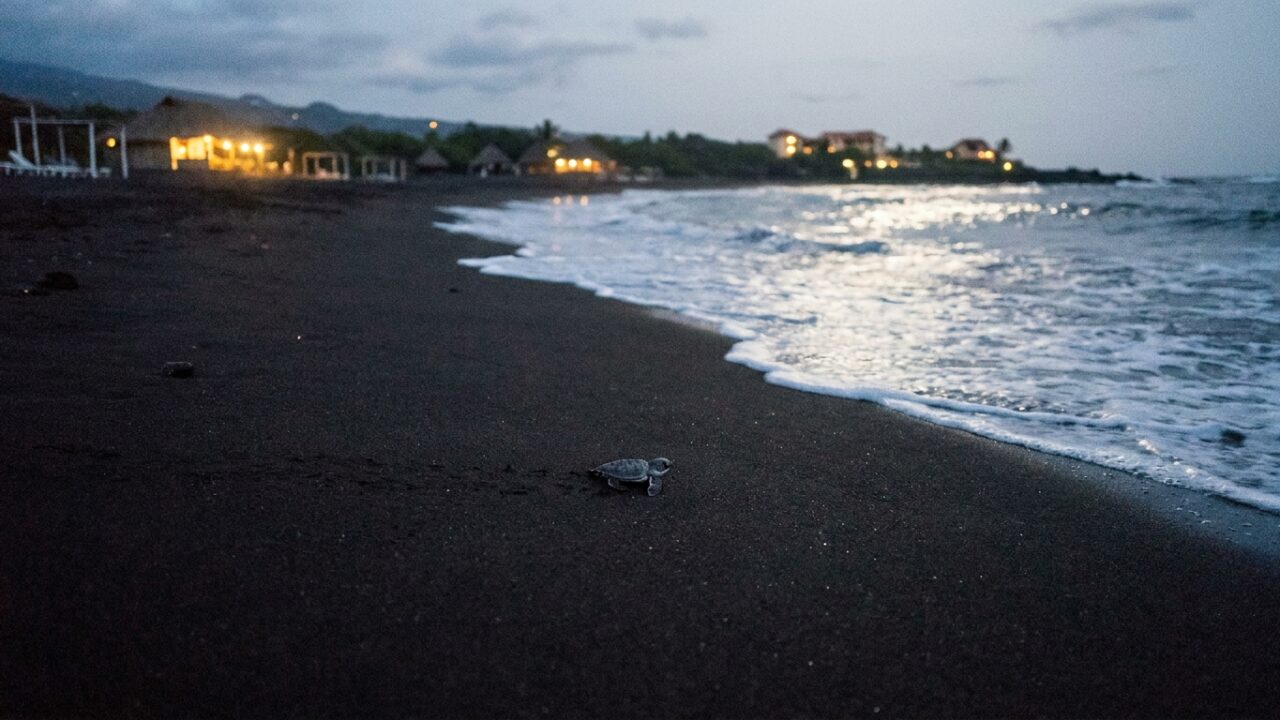
Fifty-five newborn sea turtles died along a Florida beach after artificial lights from nearby development lured them away from the Gulf of Mexico, according to wildlife officials. The hatchlings, which instinctively move toward the brightest horizon after emerging from their nests, became fatally disoriented by beachfront lighting instead of following the moon’s reflection on ocean waves.
The incident underscores an ongoing threat to sea turtle populations along Gulf Coast beaches, where increased coastal development continues to interfere with natural nesting and hatching cycles. Sea turtles face federal protection under the Endangered Species Act, yet artificial lighting remains one of the most preventable causes of hatchling mortality.
How Light Pollution Disrupts Turtle Navigation
Sea turtle hatchlings emerge from their sandy nests primarily at night, relying on natural light cues to find their way to the water. The brightest point on an undisturbed beach is typically the horizon over the ocean, where moonlight and starlight reflect off the water’s surface.
When artificial lights from buildings, streetlamps, or other coastal structures shine brighter than this natural glow, hatchlings crawl toward the wrong light source. This phenomenon, called misorientation, sends the tiny turtles away from the safety of the ocean and toward roads, buildings, or other hazards where they become exhausted, dehydrated, or fall prey to predators.
The confusion proves especially deadly during peak hatching season, which runs from May through October along Florida’s Gulf Coast. During these months, thousands of loggerhead, green, and Kemp’s ridley sea turtles nest on Florida beaches.
Prevention Measures Gulf Coast Communities Can Take
Many coastal municipalities have implemented lighting ordinances designed to protect sea turtles during nesting season. These regulations typically require beachfront properties to:
- Turn off or shield exterior lights visible from the beach between dusk and dawn
- Use turtle-friendly amber or red LED bulbs instead of white lights
- Close curtains and blinds in rooms facing the ocean
- Install motion sensors that limit unnecessary illumination
- Redirect lights downward rather than allowing them to shine horizontally toward nesting areas
Wildlife officials stress that compliance with these measures can mean the difference between survival and death for entire clutches of hatchlings. A single nest can contain between 80 and 120 eggs.
What Beachgoers Should Know
Visitors to Gulf Coast beaches during turtle season share responsibility for protecting hatchlings. Portable lights, campfires, flashlights, and even cell phone screens can disorient emerging turtles.
If you encounter hatchlings on the beach, wildlife experts recommend keeping your distance and avoiding the use of any lights. Do not attempt to guide turtles to the water yourself, as human interference can cause additional stress. Instead, contact local wildlife authorities or beach patrol if you observe disoriented hatchlings or suspect a problem.
Beach furniture and equipment left on the sand overnight can also create physical barriers that prevent hatchlings from reaching the ocean. Coastal communities increasingly encourage visitors to remove all personal items from the beach at the end of each day.
Ongoing Recovery Efforts
Several sea turtle species that nest along the Gulf Coast remain listed as threatened or endangered. Decades of conservation work have helped some populations recover, but they continue to face threats from boat strikes, fishing gear entanglement, plastic pollution, and climate change in addition to light pollution.
The Florida Fish and Wildlife Conservation Commission monitors nesting activity and hatchling success rates across the state’s beaches. Data from these surveys help inform management decisions and identify problem areas where additional protective measures may be needed.
Wildlife rehabilitators occasionally rescue misoriented hatchlings and release them into the ocean, but prevention remains the most effective strategy. Organizations along the Gulf Coast continue educating property owners and visitors about the simple steps that can save turtle lives during the critical months when beaches transform into nurseries for these ancient mariners.