
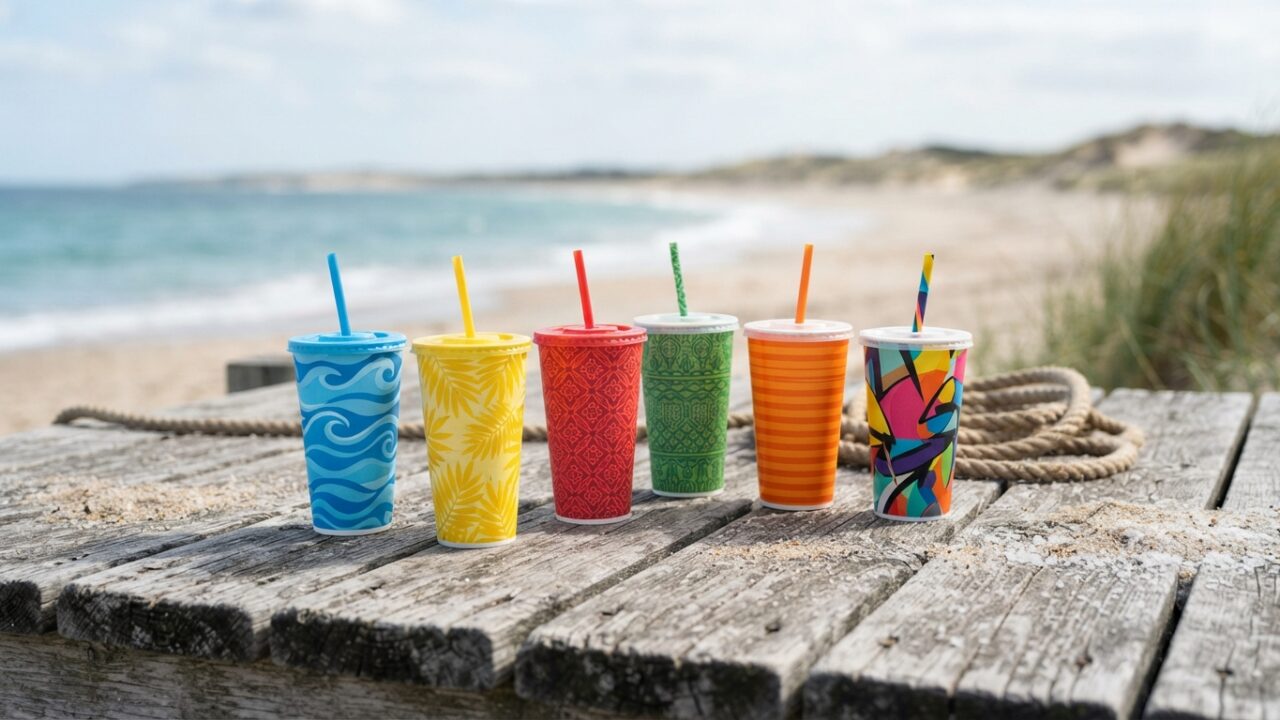
McDonald’s launches its Texas Meal on September 1, marking the chain’s latest regional menu experiment with a lineup designed to celebrate the state’s culinary identity. The promotion centers on seven collectible cups, each representing a different region of Texas, bringing corporate fast food into conversation with local food culture along the Gulf Coast and beyond.
The limited-time offering combines menu items intended to evoke Texas flavors with collectible drinkware that has already generated buzz on social media platforms. Each cup features artwork highlighting a distinct geographic and cultural area of the state, from the Panhandle to the Rio Grande Valley, including specific recognition of the Coastal Bend region that encompasses Port Aransas, Corpus Christi, and surrounding barrier island communities.
Seven Regions, Seven Designs
The collectible cup series divides Texas into seven cultural zones, each receiving unique graphic treatment. While McDonald’s has not released detailed images of all designs, the promotion acknowledges regional differences that Texans recognize in geography, dialect, cuisine, and lifestyle. The Coastal Bend cup reportedly features imagery connected to beach culture, fishing heritage, and the unique ecosystem where prairie meets Gulf waters.
For residents of Port Aransas and nearby coastal communities, the recognition carries particular weight. The Coastal Bend remains distinct from Houston’s industrial coastline to the northeast and the border culture of South Texas, with its own blend of commercial fishing, tourism, birding, and maritime traditions. Whether a fast-food cup can capture that complexity remains an open question, but the attempt represents rare mainstream acknowledgment of regional identity.
The other six regions receiving cup designs include North Texas, East Texas, West Texas, the Hill Country, the Panhandle, and South Texas. Each area brings different associations—cattle ranching, piney woods, desert landscapes, German immigrant heritage, wheat fields, and border crossings—creating a geographic puzzle that any Texan could debate for hours.
Menu Items With Texas Branding
Beyond the collectible cups, the Texas Meal introduces menu items positioned as regional favorites. The promotion features a Quarter Pounder with cheese topped with jalapeños and served with a side of queso, alongside the chain’s standard french fries and a drink. The combination leans into expectations of what non-Texans imagine Texas food to be: beef, melted cheese, and heat.
The menu design raises questions about authenticity that food writers and cultural critics will likely explore throughout the promotion’s run. Jalapeños and queso have become shorthand for Texas cuisine in national marketing, though locals know the state’s food landscape extends far beyond these elements. Along the coast, seafood dominates menus, from shrimp po’boys to ceviche to blackened redfish, none of which appear in McDonald’s Texas interpretation.
The pricing structure and exact availability dates beyond the September 1 launch have not been fully detailed in early announcements. McDonald’s typically runs limited-time promotions for four to six weeks, suggesting the Texas Meal could remain available through early October, though the collectible cups often disappear from restaurants well before menu items end as customers seek complete sets.
Collectible Culture and Fast Food
Fast-food collectibles have generated surprising secondary markets in recent years. McDonald’s previous collaborations with musicians, athletes, and pop culture properties have sent customers rushing to restaurants, with some collectible packaging appearing on resale platforms at multiples of original value. The Texas cups enter this landscape with built-in appeal to state pride, a powerful motivator in a place where identity and geography intertwine.
Coastal residents traveling inland for work or family visits may find themselves strategizing about which cups remain available at different locations. The reverse holds true as well—visitors from Dallas or Austin arriving at Port Aransas could seek the Coastal Bend design as a souvenir alongside the usual beach towels and shell collections.
The promotion arrives during late summer, traditionally a slower period for coastal tourism as families return to school routines and before fall fishing and birding seasons fully commence. Whether the cup promotion drives meaningful additional traffic to McDonald’s locations in Corpus Christi, Port Aransas, and Rockport remains to be seen, though the company presumably models these campaigns on data from previous regional experiments.
Regional Food Identity on the Gulf Coast
The Texas Meal promotion unfolds against a backdrop of evolving food culture along the Coastal Bend. The region has seen growth in restaurants emphasizing local ingredients, particularly Gulf seafood, alongside established institutions serving Mexican Gulf Coast cuisine that predates any corporate interpretation of Texas food.
Port Aransas maintains a distinct culinary character shaped by its island geography and fishing economy. Restaurants here focus on what comes off the boats—snapper, flounder, crab, oysters—prepared in ways that reflect multiple cultural influences. The idea of defining Texas food through beef and jalapeños overlooks coastal foodways that have existed for generations.
At the same time, fast-food chains remain fixtures of the coastal landscape, serving both residents and tourists seeking familiar options. McDonald’s locations in beach communities adapt to seasonal population swings, staffing challenges, and customers arriving in swimsuits and sandy flip-flops. The Texas Meal gives these locations a regional hook, however commercially constructed.
What the Promotion Reveals
The decision to divide Texas into seven regions for cup designs required McDonald’s marketing team to make choices about what constitutes meaningful geographic boundaries. The Coastal Bend designation acknowledges a regional identity that residents recognize but outsiders often collapse into broader categories like South Texas or the Gulf Coast.
This recognition, even in service of selling hamburgers and soft drinks, reflects growing corporate awareness of regional distinctions within large states. Texas contains multiple climate zones, ecosystems, cultural traditions, and economic patterns, making statewide generalizations problematic. A promotion that attempts to honor those differences, however imperfectly, represents a shift from earlier one-size-fits-all approaches.
The cups themselves will likely outlast the menu items in cultural memory. Physical objects with regional designs become keepsakes, conversation pieces, and eventually artifacts that appear in thrift stores and estate sales. Future residents sorting through belongings decades from now may encounter these cups and wonder about the moment when a fast-food chain attempted to capture Texas in seven drink containers.
McDonald’s has not announced whether successful regional promotions might expand to other states or return to Texas in different forms. The company’s willingness to experiment with localized offerings suggests ongoing interest in balancing national brand consistency with regional relevance, a tension that defines much of American consumer culture.
Customers seeking complete cup sets will need to visit multiple times or multiple locations, as restaurants typically receive limited quantities of each design. Collectors should expect variations in availability, particularly in smaller markets where inventory turns over differently than in urban centers.
