
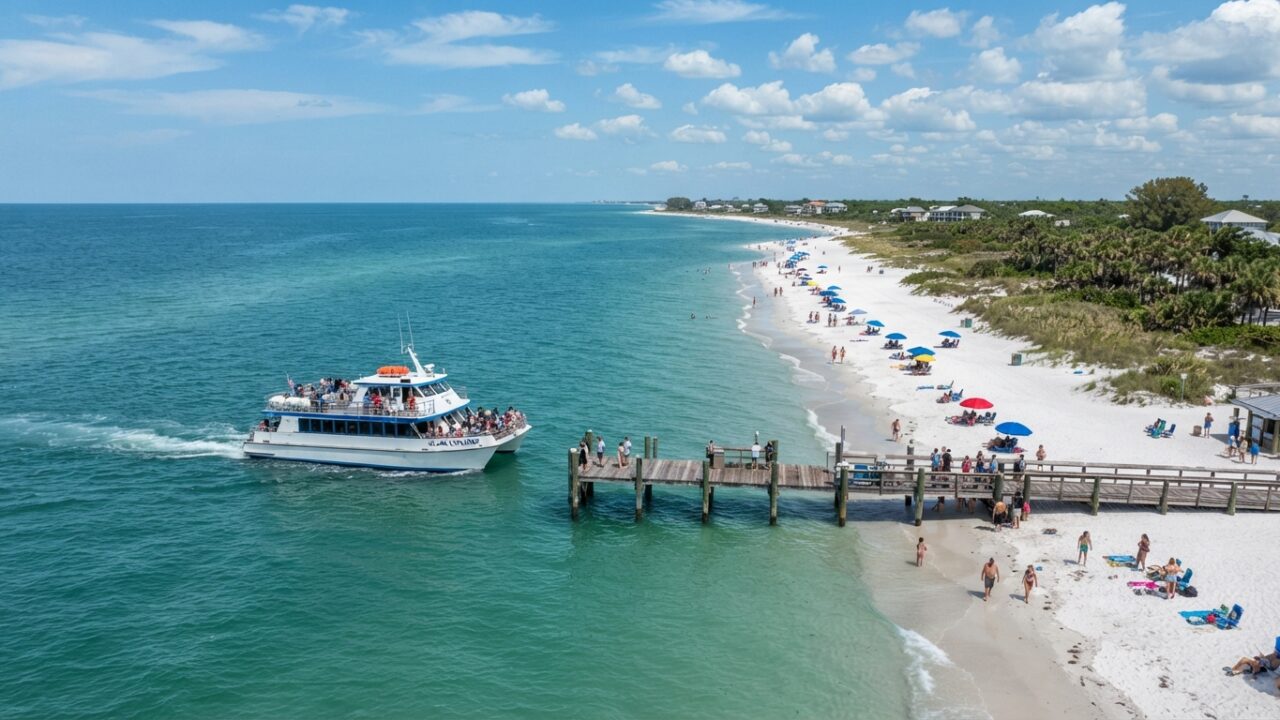
Visitors to Anna Maria Island can now skip the bridge traffic and arrive by water. A new ferry stop at Coquina Beach has launched, creating a direct maritime connection between Bradenton Beach and the popular northern stretch of the barrier island. The service expands coastal transit options along Florida’s Gulf Coast and offers a glimpse at what marine-based transportation could look like for beach communities.
The ferry route operates as part of a regional effort to reduce vehicle congestion on the limited roadways serving barrier islands. Anna Maria Island, accessible primarily via the Cortez Bridge and the Anna Maria Island Bridge, experiences heavy traffic during peak season, particularly on weekends and holidays. The water-based alternative provides both residents and tourists with a practical option that bypasses terrestrial chokepoints.
Route Details and Service Schedule
The ferry departs from Bradenton Beach, making stops at strategic points before reaching Coquina Beach on the northern end of Anna Maria Island. Coquina Beach itself serves as a major destination, known for its natural shoreline, picnic facilities, and the historic Coquina Beach Pavilion. The location choice addresses a practical need: parking at Coquina Beach fills quickly during summer months and on warm winter weekends.
Operating schedules accommodate both day-trippers and those planning extended beach visits. While specific departure times vary seasonally, the service runs multiple trips daily during high-demand periods. The ferry can transport passengers along with beach gear, coolers, and bicycles, making it functional for families planning full-day outings rather than just a novelty ride.
Implications for Barrier Island Access
For those familiar with Texas barrier islands like Mustang Island and Padre Island, the concept resonates. Port Aransas relies heavily on ferry service to connect the island to the mainland, and that marine link fundamentally shapes how people experience the coast. The Texas Department of Transportation operates free ferries across the Corpus Christi Ship Channel, moving thousands of vehicles daily and serving as critical infrastructure rather than tourist attraction.
The Bradenton Beach to Coquina Beach route represents a different model—one focused on passenger service rather than vehicle transport. This approach may prove more viable for communities where bridge access exists but where traffic volume exceeds road capacity. It also opens possibilities for how other Gulf Coast barrier islands might address similar congestion issues without the massive expense of additional bridge construction.
Environmental considerations factor into the equation. Ferries powered by modern engines produce emissions, but consolidating passengers onto a single vessel reduces the cumulative impact compared to dozens of individual cars making the same journey. Some coastal communities have explored electric or hybrid ferry options, though none have been announced for this particular route.
Recreational and Practical Benefits
The ferry service creates opportunities beyond simple transportation. Passengers traveling by water gain coastal perspectives impossible from a car—views of dolphin pods, feeding seabirds, and the barrier island’s shape from offshore. For photographers and wildlife enthusiasts, the transit itself becomes part of the experience.
Anglers stand to benefit as well. The ability to reach different beach access points without dealing with parking limitations expands fishing opportunities. Someone staying in Bradenton Beach can now easily fish Coquina Beach in the morning and return without fighting midday traffic. Likewise, families can split their time between different beach zones without the logistical hassle of moving vehicles.
The service also addresses a practical concern for visitors without cars. Tourists arriving by air or staying in accommodations without parking can now access multiple beach locations without rental vehicles or ride-share expenses. This expands the visitor base and potentially extends stays for those who might otherwise feel confined to a single location.
Gear Considerations for Ferry Travel
Traveling to the beach by ferry requires slightly different preparation than driving. Gear needs to be portable and manageable without a vehicle trunk for staging. Wheeled beach carts become more valuable. Soft-sided coolers work better than rigid models. Umbrella and shade systems should be lightweight and collapsible.
Anyone planning to bring fishing equipment should opt for rod cases that protect gear during boarding and disembarkation. Tackle should be organized in waterproof bags or boxes that can withstand spray. The same consideration applies to electronics, cameras, and phones—even on calm days, marine environments introduce moisture that land-based outings don’t.
Context Within Gulf Coast Transportation Trends
The Coquina Beach ferry stop arrives as coastal communities throughout the Gulf Coast reassess transportation infrastructure. Rising populations and increased tourism have strained roadways designed for smaller volumes. Bridge construction costs have escalated dramatically, and environmental permitting for new crossings involves years of review.
Water-based transit offers flexibility that fixed infrastructure lacks. Routes can adjust seasonally, vessels can be added or removed based on demand, and service can expand to new stops without major construction. These advantages make ferry systems attractive for barrier islands where development must balance access with preservation.
Other Florida communities have explored similar concepts. Ferries connect various parts of the Tampa Bay area, and seasonal services link mainland communities to island destinations during peak tourist seasons. The success of the Bradenton Beach to Coquina Beach route could influence decisions elsewhere along the Gulf Coast.
What Remains Uncertain
Questions persist about the long-term viability and potential expansion of the service. Operational costs for marine transit exceed those for bus routes, and fare structures must balance affordability with sustainability. Whether the route receives public subsidies or operates as a private venture affects both pricing and longevity.
Weather impacts also require monitoring. While the protected waters around Anna Maria Island generally allow safe passage, summer thunderstorms and occasional tropical systems can interrupt service. How operators handle cancellations and passenger communications during weather events will shape user confidence.
Expansion possibilities include additional stops along the island’s length or connections to mainland communities beyond Bradenton Beach. The infrastructure investment required for ferry docks limits how quickly new stops can be added, but the framework now exists for a more comprehensive water-based transit network serving the barrier islands.
