
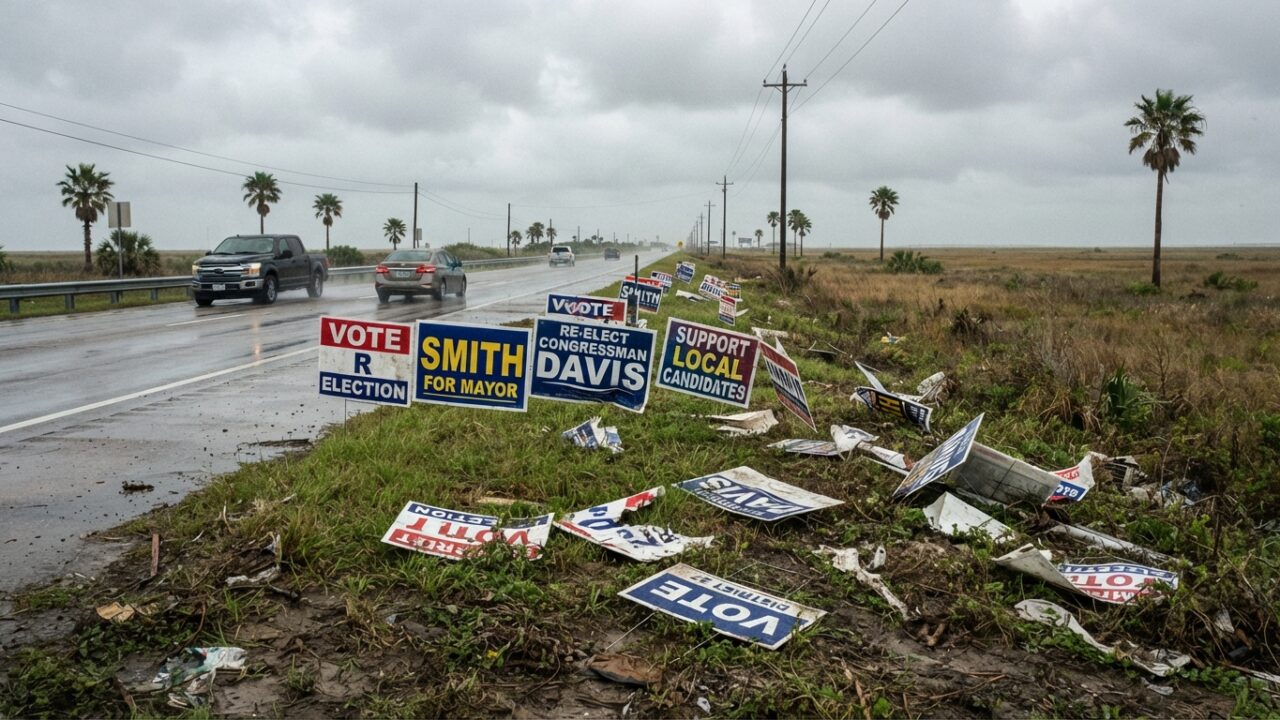
Campaign sign vandalism allegations have ignited a heated dispute among Texas politicians in a coastal district race, with accusations that signs for a female candidate are being targeted for destruction. The controversy has drawn attention to the often-overlooked issue of campaign property damage in smaller coastal communities where political races typically generate less friction.
Local political observers note that while sign theft and vandalism occur in most election cycles, the current allegations suggest a pattern specifically targeting one candidate’s materials. The dispute has moved beyond routine campaign complaints to become a focal point of the race itself, with supporters on both sides trading accusations about who bears responsibility.
Pattern of Damage Reported Along Coastal Routes
The alleged vandalism has occurred across multiple locations in the coastal district, with reports concentrated along main thoroughfares and intersections where campaign visibility reaches its peak. Supporters of the affected candidate claim that signs placed in high-traffic areas have been removed, defaced, or destroyed within hours or days of installation.
Several property owners who volunteered their land for campaign signage have reported finding damaged materials on their premises. Unlike typical weather-related wear that affects all campaign materials equally during the humid coastal climate, these reports describe deliberate destruction that leaves signs bent, torn, or missing entirely.
The pattern has raised questions about whether organized efforts are underway to reduce the visibility of specific candidates. Campaign volunteers report spending additional time and resources replacing damaged signs, diverting energy from other campaign activities during the final weeks before Election Day.
Legal Framework Governs Campaign Sign Placement
Texas law establishes specific protections for campaign signs while setting boundaries for their placement and maintenance. Political signs placed on private property with owner permission receive strong legal protections, with removal or vandalism potentially constituting criminal mischief or theft depending on the circumstances and value of materials damaged.
Municipal codes in coastal communities typically regulate sign size, placement distance from roadways, and removal deadlines after elections conclude. These regulations aim to balance free speech rights with aesthetic concerns and traffic safety considerations. However, enforcement of anti-vandalism provisions often proves challenging, particularly in sprawling districts where signs spread across dozens of miles.
Law enforcement officials generally treat sign vandalism as a lower priority compared to other property crimes, especially when individual incidents involve relatively small financial losses. Documentation through photographs and witness statements becomes crucial when patterns suggest coordinated activity rather than isolated pranks or weather damage.
Coastal Campaign Challenges Extend Beyond Vandalism
Political campaigns along the Texas coast face unique environmental challenges that complicate sign maintenance even without vandalism. Salt air accelerates material deterioration, while wind gusts during storm systems can uproot poorly anchored signs. Distinguishing between natural damage and deliberate destruction requires careful assessment.
The flat terrain and long sight lines characteristic of barrier island and coastal prairie landscapes make sign placement particularly strategic. Prime locations near bridges, beach access points, and main arterial roads attract heavy competition among campaigns. Property owners in these areas often receive multiple requests for sign placement, creating informal hierarchies based on longstanding political relationships.
Campaign finance considerations also shape sign strategies in coastal races. Smaller districts with limited fundraising capacity must carefully allocate resources between different outreach methods. Repeated replacement of vandalized signs drains budgets that might otherwise support voter contact efforts or digital advertising.
Gender Dynamics in Local Political Races
The allegation that a female candidate’s signs face disproportionate targeting has introduced gender considerations into the dispute. Women candidates in local Texas races have reported various forms of discrimination and harassment, from dismissive treatment at public forums to questions about their qualifications that male counterparts rarely face.
Political scientists who study gender in elections note that vandalism targeting female candidates sometimes includes sexist language or imagery not present in attacks on male opponents. Whether the current allegations involve such elements remains unclear from available information, but the pattern itself has raised concerns among those tracking barriers women face in Texas politics.
Coastal communities have elected women to various offices, including mayor and city council positions, though representation varies widely among different municipalities. The current controversy may influence how future female candidates approach campaign security and resource allocation.
Community Response and Ongoing Investigation
Local political organizations have called for respect of campaign property regardless of partisan preference. Some community groups have offered to monitor sign locations or provide replacement materials to affected campaigns, seeking to defuse tensions that could escalate as Election Day approaches.
Documentation efforts continue as supporters of the affected candidate work to establish clear evidence of systematic targeting. Photographic records showing intact signs followed by images of damage help build cases for potential law enforcement action, though prosecution rarely occurs in sign vandalism cases unless perpetrators are caught in the act.
The dispute has generated discussion about whether coastal communities need stronger enforcement mechanisms for campaign property protection. Some local officials suggest that enhanced penalties for political vandalism could deter future incidents, while others argue that existing laws provide adequate tools if properly applied.
Property owners who have experienced repeated sign damage face decisions about whether to continue hosting campaign materials. Some have installed security cameras or increased outdoor lighting to deter vandals, while others have relocated signs to more visible positions where tampering would be more easily witnessed.
What Remains Unresolved
No charges have been filed in connection with the alleged vandalism, and competing claims about responsibility continue without definitive evidence identifying perpetrators. The dispute has complicated an already contentious race, with attention shifting from policy positions to procedural controversies.
Campaign officials for various candidates have not provided detailed public statements about internal security measures or damage documentation. Whether law enforcement agencies are actively investigating the allegations or treating them as civil disputes between political opponents remains unclear.
As the election approaches, the controversy over sign vandalism may influence voter perceptions about campaign conduct and community civility. How coastal residents respond to these allegations could shape not only the current race but also expectations for future political contests in the region.
