
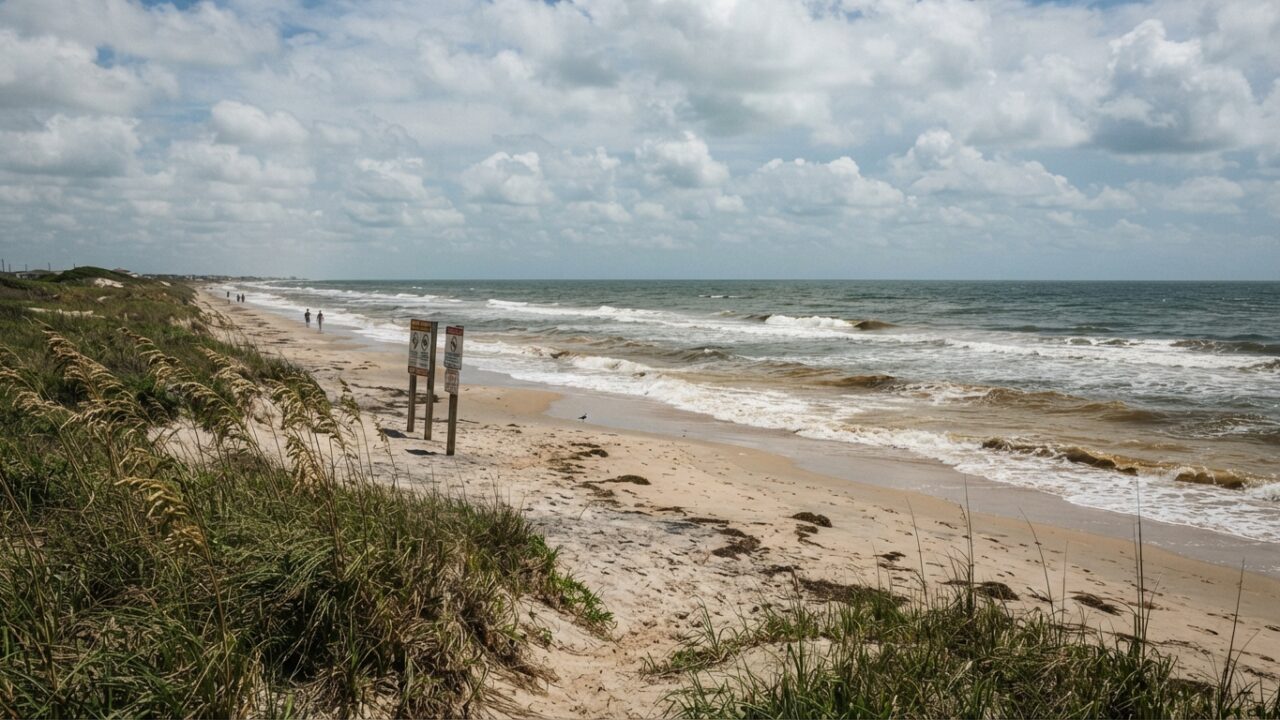
Health officials issued warnings for Galveston County beaches this week as red tide conditions worsened along the Texas Gulf Coast. The advisory comes as concentrations of the harmful algae Karenia brevis reached levels that can cause respiratory irritation for beachgoers and visitors to the coastal areas.
The Texas Parks and Wildlife Department confirmed elevated levels of the toxin-producing organism in water samples collected from multiple sites along the Galveston coastline. Beach monitoring stations recorded concentrations sufficient to trigger public health notifications, though authorities have not closed any beaches at this time.
What Red Tide Means for Beach Activities
Red tide occurs when microscopic algae multiply rapidly in coastal waters, sometimes turning the water reddish or brown. The organisms produce brevetoxins that become aerosolized in sea spray and breaking waves. When inhaled, these toxins irritate the respiratory system, causing coughing, sneezing, and throat discomfort in otherwise healthy individuals.
People with asthma, chronic respiratory conditions, or compromised immune systems face higher risks. Health authorities recommend that anyone in these categories avoid beaches during red tide events or limit their time near the surf zone where wave action releases the most airborne toxins.
The current bloom has already resulted in visible fish kills along portions of the Galveston shoreline. Dead fish washing ashore represent a common consequence of red tide, as the brevetoxins affect marine life by disrupting normal gill function and nervous system activity. Beach maintenance crews have increased cleanup efforts to remove deceased marine animals before decomposition creates additional health concerns.
Geographic Extent and Duration
The red tide bloom affecting Galveston represents part of a larger pattern documented across the western Gulf of Mexico in recent weeks. Similar conditions have been reported intermittently from South Padre Island northward through the upper Texas coast, though intensity and duration vary considerably by location.
Predicting how long a red tide bloom will persist remains challenging. These events depend on water temperature, salinity, nutrient availability, and ocean currents. Some blooms dissipate within days when wind patterns shift or currents carry the algae offshore. Others linger for weeks or even months when environmental conditions remain favorable for continued growth.
Current weather patterns show light onshore winds that tend to concentrate red tide organisms near the beach rather than dispersing them into deeper waters. This meteorological setup increases the likelihood that beachgoers will encounter respiratory irritation, even if water concentrations remain moderate.
Safety Recommendations for Coastal Visitors
Health officials advise visitors to monitor conditions before heading to Galveston beaches. The Texas Parks and Wildlife Department maintains updated red tide status reports on its website, providing current information about affected areas and concentration levels.
Those who choose to visit beaches during red tide conditions should watch for warning signs. A strong, pungent odor at the beach often indicates the presence of red tide toxins in the air. Visible discoloration of the water, ranging from rust-colored to greenish-brown, may signal an active bloom, though not all red tide events produce obvious color changes.
If respiratory symptoms develop while at the beach, moving away from the shoreline typically provides relief. The concentration of airborne toxins decreases rapidly with distance from breaking waves. Spending time on the upper beach or in areas protected from direct sea spray reduces exposure.
Swimming during red tide presents additional considerations. While the toxins do not penetrate healthy skin, they can irritate eyes, noses, and throats when people swim in affected waters. Individuals who choose to swim should shower thoroughly with fresh water afterward and avoid rubbing their eyes before washing their hands.
Impact on Marine Wildlife and Fishing
Beyond human health concerns, the current red tide bloom affects coastal ecosystems and fishing activities. Fish kills associated with red tide remove forage species that larger game fish depend on, potentially impacting both recreational and commercial fishing in subsequent weeks.
Shellfish harvesting faces particular restrictions during red tide events. Oysters, clams, and other filter-feeding mollusks accumulate brevetoxins in their tissues when feeding in contaminated waters. Texas health authorities close shellfish harvesting areas when testing reveals elevated toxin levels, protecting consumers from neurotoxic shellfish poisoning.
The current advisory does not prohibit finfish consumption, as brevetoxins concentrate primarily in internal organs rather than muscle tissue. Anglers who catch fish in affected waters should remove all viscera and wash fillets thoroughly. Most fish swimming in red tide areas show normal behavior and remain safe to eat when properly cleaned.
Historical Context Along Texas Barrier Islands
Red tide events occur periodically along the Texas coast, though their frequency and severity vary considerably from year to year. Some years pass with minimal or no red tide activity, while other periods see multiple blooms affecting different coastal segments.
The Texas barrier islands, including Galveston, experience unique dynamics during red tide events. The narrow passages between barrier islands and the mainland can concentrate algae blooms, particularly when tidal currents and wind patterns align. Conversely, strong tidal flushing through these passes sometimes clears red tide organisms more quickly than in other coastal configurations.
Water quality monitoring programs established after previous red tide events now provide earlier detection and more detailed tracking. This improved surveillance allows health officials to issue warnings before conditions reach peak intensity, giving beachgoers time to adjust their plans.
What Comes Next
Officials continue daily monitoring of water samples to track the bloom’s progression. Testing results determine whether conditions improve enough to lift health advisories or whether warnings need expansion to additional beach areas.
Weather forecasts for the coming week show variable wind patterns that could either disperse the bloom offshore or maintain current conditions. Beach visitors should check updated reports before making coastal trips, particularly those planning extended outdoor activities along the Galveston shoreline.
The presence of red tide does not eliminate all beach activities. Many visitors continue enjoying the coast during these events by choosing activities farther from the surf zone or spending shorter periods directly at the waterline where aerosol exposure remains highest.
