
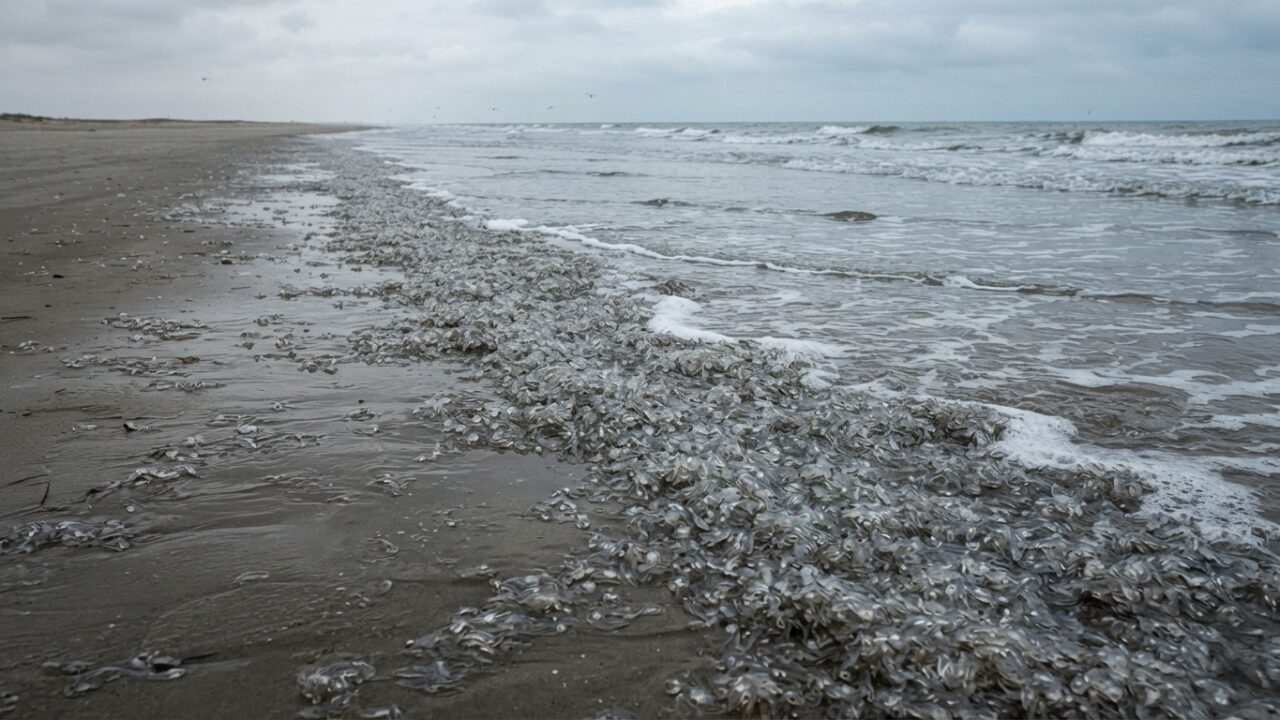
Beachgoers along the Texas coast are experiencing an unexpected hazard this week as millions of sea butterflies have washed ashore, delivering painful stings to anyone who comes into contact with them. The tiny marine creatures, officially called pteropods, have blanketed stretches of sand from South Padre Island to the Upper Texas Coast, creating an uncomfortable situation for residents and tourists alike.
The translucent organisms, which measure less than an inch in length, pack a surprising punch despite their delicate appearance. Contact with their microscopic barbs causes a stinging sensation similar to jellyfish stings, though typically less severe. The sheer volume of sea butterflies on the beach means avoiding them has become nearly impossible in affected areas.
What Sea Butterflies Are Doing on Texas Beaches
Sea butterflies are not actually butterflies but free-swimming sea snails that live in the open ocean. They earned their common name from the wing-like appendages they use to propel themselves through water. These creatures typically inhabit deeper offshore waters, feeding on microscopic plankton while drifting with ocean currents.
Massive strandings of pteropods along the Texas coast occur periodically, though not every year. Strong winds and changing ocean currents can push enormous populations of these creatures toward shore. Once caught in the surf zone, they lack the swimming power to escape and end up deposited on the sand in thick windrows.
The current event appears to involve multiple species of pteropods, creating dense accumulations along the wrack line where high tide deposits marine debris. In some locations, the sea butterflies form layers several inches thick, making it impossible to walk barefoot without stepping on them.
How the Stings Affect Beach Visitors
The stinging sensation occurs when the pteropods’ defensive structures contact human skin. While individual stings register as minor irritation, multiple exposures from walking through dense accumulations can create more significant discomfort. The affected skin typically shows redness and may itch for several hours after contact.
Local beach patrol units have reported increased calls about the organisms. Visitors unfamiliar with sea butterflies sometimes mistake them for jellyfish parts or assume they are harmless shells. Children playing in the sand near the water line have been particularly affected, as they often sit or crawl through areas where the creatures accumulate.
For those determined to enjoy the beach despite the strandings, wearing water shoes provides effective protection. The organisms quickly lose their ability to sting once they dry out in the sun, so areas above the recent high tide line generally pose less risk. Rinsing with fresh water helps remove any pteropods stuck to skin or clothing.
Where the Problem Is Most Severe
Reports indicate the heaviest concentrations have appeared on beaches facing southeast, where prevailing winds have pushed the most material ashore. Port Aransas, Mustang Island, and northern Padre Island have seen particularly dense accumulations. Galveston Island beaches have also reported significant numbers, though concentrations vary by specific location.
The strandings are not uniform along the coast. Some beach access points show heavy deposits while areas just a few hundred yards away remain relatively clear. This patchy distribution reflects how local wind patterns and nearshore currents concentrate floating material in certain zones.
Beach conditions change daily as new waves deposit fresh organisms and wind redistributes dried material. What appears as a minor problem one morning may develop into a major accumulation by afternoon if wind and tide conditions align. Checking current beach reports before heading out helps visitors avoid the worst-affected areas.
The Ecological Context of Mass Strandings
Pteropods play an important role in marine food webs, serving as prey for fish, seabirds, and larger invertebrates. Their shells, made of aragonite, contribute to ocean chemistry and eventually to seafloor sediments. When populations explode under favorable conditions, the resulting swarms can number in the billions.
These population booms typically reflect good conditions for plankton growth, which provides abundant food for the pteropods. However, the same winds and currents that concentrate plankton can also push pteropod populations into coastal areas where they become stranded. The current event likely represents only a fraction of a much larger offshore population.
Mass strandings of various marine organisms occur regularly along the Texas coast. Portuguese man-of-war, comb jellies, and by-the-wind sailors all wash ashore periodically when conditions favor onshore transport. The timing and species involved vary from year to year based on ocean temperatures, wind patterns, and current behavior.
Duration and What Comes Next
The length of the current stranding depends on whether offshore populations continue to move toward the coast. If wind patterns shift to blow from the land or from a different direction, new arrivals will cease and existing accumulations will gradually wash away or decompose.
Past events involving similar organisms have lasted anywhere from a few days to more than a week. Hot sun and dry weather accelerate the breakdown of stranded material. Rain and high humidity slow decomposition but also keep the organisms more intact, potentially prolonging the stinging hazard.
Beach maintenance crews face a difficult situation when deciding whether to attempt removal. The sheer volume of material makes mechanical cleaning challenging, and the organisms are so small that standard beach-cleaning equipment may not effectively remove them. Many coastal communities opt to let natural processes handle the cleanup rather than risk damaging beach habitat with heavy equipment.
For residents and regular visitors familiar with Gulf Coast conditions, these strandings represent another example of how dynamic the beach environment remains. The same forces that deliver these temporary nuisances also bring nutrients that support coastal fisheries and create the constantly changing conditions that define barrier island life.
Beach users planning visits in the coming days should monitor local beach condition reports and consider alternative activities if pteropod concentrations remain high. The organisms pose no long-term threat to beach health, and normal conditions will return once the offshore population disperses or moves away from coastal waters.
