
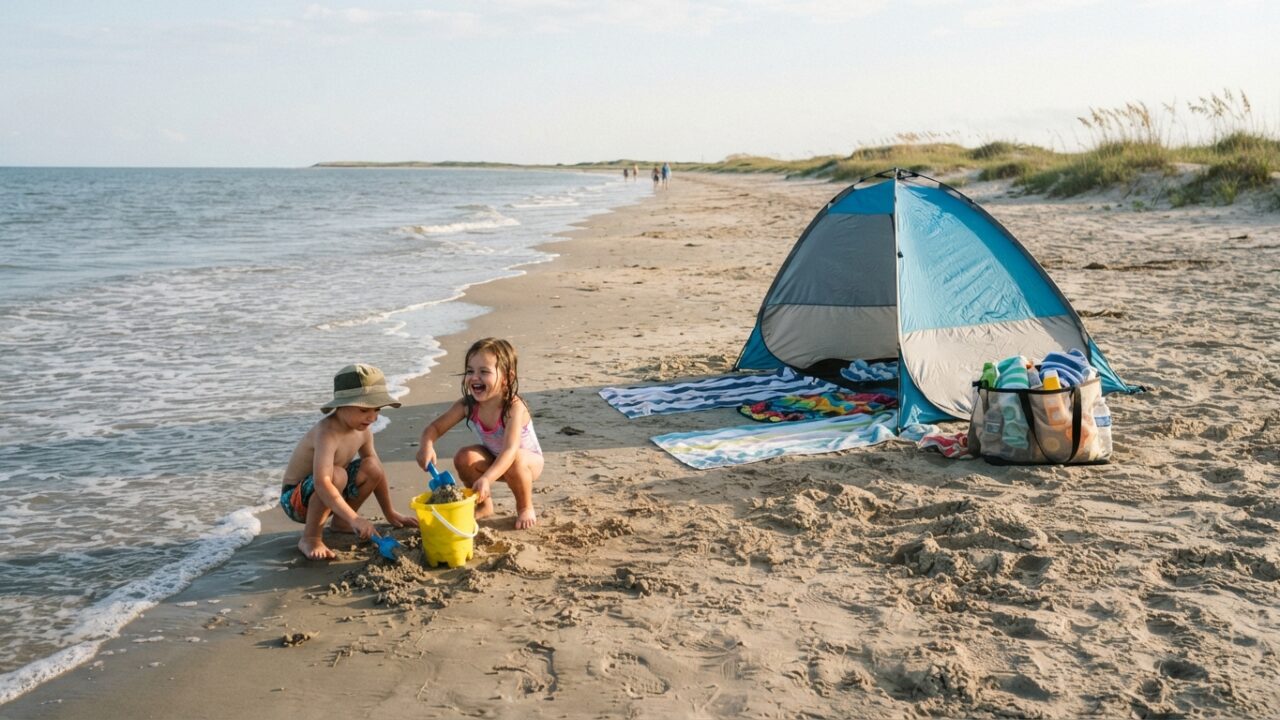
The first family beach outing often involves loading enough equipment to sustain a small expedition. Parents arrive at the parking lot facing a quarter-mile trudge across sand with armloads of items that seemed critical at home but prove redundant once the waves start rolling.
The reality along the Texas coast means adapting to heat, wind, and children who shift between water play and sand digging within minutes. A disciplined packing strategy reduces hauling while ensuring comfort and safety throughout the day.
The Core Kit That Covers Most Scenarios
\p>Start with a single large beach bag or backpack that holds the genuine necessities. A mesh tote allows sand to fall through rather than accumulating in pockets, while a backpack with padded straps distributes weight when carrying a child simultaneously.
Sunscreen ranks as the non-negotiable item. Choose a broad-spectrum formula rated SPF 30 or higher in a stick or spray format that applies quickly on squirming toddlers. Reapplication matters more than brand, so pack a size that fits easily rather than the economy bottle left in the car.
Drinking water requirements increase dramatically in coastal heat. Bring a large insulated bottle for shared sips rather than individual disposables. Freeze half the contents the night before to maintain cool temperatures for hours without ice packs taking up space.
Snacks prevent meltdowns when hunger strikes between meals. Opt for items that tolerate heat and sand exposure: whole fruit, pretzels, crackers in resealable containers. Avoid anything chocolate-based or requiring refrigeration. Pack slightly more than expected, accounting for sand-contaminated pieces that get discarded.
Shade Solutions That Actually Stay Put
Coastal winds turn standard beach umbrellas into projectiles. A pop-up tent with sandbag anchors or a canopy designed for windy conditions provides reliable shelter without constant repositioning.
For families with infants or very young toddlers, a tent with UV-protective fabric and ventilation panels creates a protected zone for naps and diaper changes. Models that fold into a carrying case with shoulder straps eliminate the need for separate transport.
Some parents prefer a large beach blanket with corner pockets that fill with sand to hold it flat. This approach works for older children who move in and out of shade rather than staying stationed under a canopy.
Toys and Entertainment Without the Clutter
Children find entertainment in natural beach materials, making elaborate toy collections unnecessary. A single small bucket and shovel enable digging, pouring, and castle construction without occupying cargo space.
Skip items with multiple small parts that disappear in sand or wash away in surf. Avoid inflatable toys requiring pumps or prone to punctures. A simple foam boogie board serves kids too young for actual wave riding while providing a surface for sand play when pulled ashore.
For children who need transitional comfort items, bring one small waterproof toy that tolerates saltwater. Rinse thoroughly after the outing to prevent corrosion and extend its usability.
Clothing and Towel Strategy
Dress children in swimwear before leaving home, with a cotton shirt over top for the drive. This eliminates beachside changing struggles and reduces the clothing pile.
Rash guards with long sleeves provide sun protection that supplements rather than replaces sunscreen. The tight-fitting fabric prevents chafing from sand and dries quickly when kids alternate between water and shore play.
Bring one towel per child rather than multiple options. Choose thin, quick-drying microfiber versions that compress smaller than traditional terry cloth. Designate these as drying towels only, not play surfaces or blankets, to maintain their primary function.
Pack a single change of clothes for the return trip in a separate waterproof bag. Include only basics: underwear, shorts, shirt. Children can ride home barefoot with sandy feet rather than requiring complete outfit changes.
The Diaper and Toilet Situation
For families with children in diapers, bring exactly the number needed for the planned duration plus two extras. Store them in a small wetbag that also holds used diapers until proper disposal.
Include a compact pack of wipes that serves multiple purposes: cleanup after bathroom needs, sticky hands from snacks, sand removal before car loading. A small bottle of hand sanitizer handles situations where water access proves difficult.
Portable changing pads add bulk without significant benefit when a towel laid in the shade provides equivalent function. Many parents change diapers directly on the sand away from high-traffic areas, then shake out the towel afterward.
What Actually Stays in the Vehicle
Certain items remain more useful when left at the parking area rather than carried to the beach setup. A large cooler stays locked in the car, accessed only for meal times or bottle refills. This prevents constant trips while keeping perishables properly chilled.
Extra sunscreen, first aid supplies, and backup clothing store in the vehicle as reserves rather than primary supplies. If the beach bag contains one tube of sunscreen and it runs out, the walk back for more takes five minutes rather than ending the outing.
Rinse equipment lives permanently in the vehicle: a gallon jug of fresh water for washing sandy feet before entering the car, a small basin for dunking toys and gear. This post-beach cleanup prevents sand migration into car seats and home floors.
Timing and Realistic Expectations
Morning outings before peak heat reduce the gear needed for comfort. Arriving by nine allows several hours of play before sun intensity and temperatures make extended exposure uncomfortable regardless of equipment.
Plan for shorter duration trips with young children rather than full-day marathons requiring meal preparation and nap accommodations. A two-hour beach window keeps children engaged without overwhelming parents or requiring extensive provisions.
The carry-in, carry-out principle applies beyond trash. Everything brought to the beach returns home the same day. Designating a specific spot near the beach access for bag staging during the visit prevents the scavenger hunt for scattered items when ready to depart.
Learning Through Iteration
First attempts at streamlined packing reveal which items prove genuinely necessary versus theoretical conveniences. Some families discover their children ignore toys entirely, making them easy eliminations. Others find that a particular snack prevents tantrums, earning permanent kit status.
Taking brief notes after each outing identifies patterns. If sunscreen always runs out, pack a larger tube. If the towels never get used for drying because kids air-dry while playing, consider eliminating one.
The goal remains accessing beach time with young children regularly rather than making each trip a logistical production. When packing takes fifteen minutes instead of an hour, spontaneous afternoon visits become feasible rather than weekend-only events requiring advance planning.
