
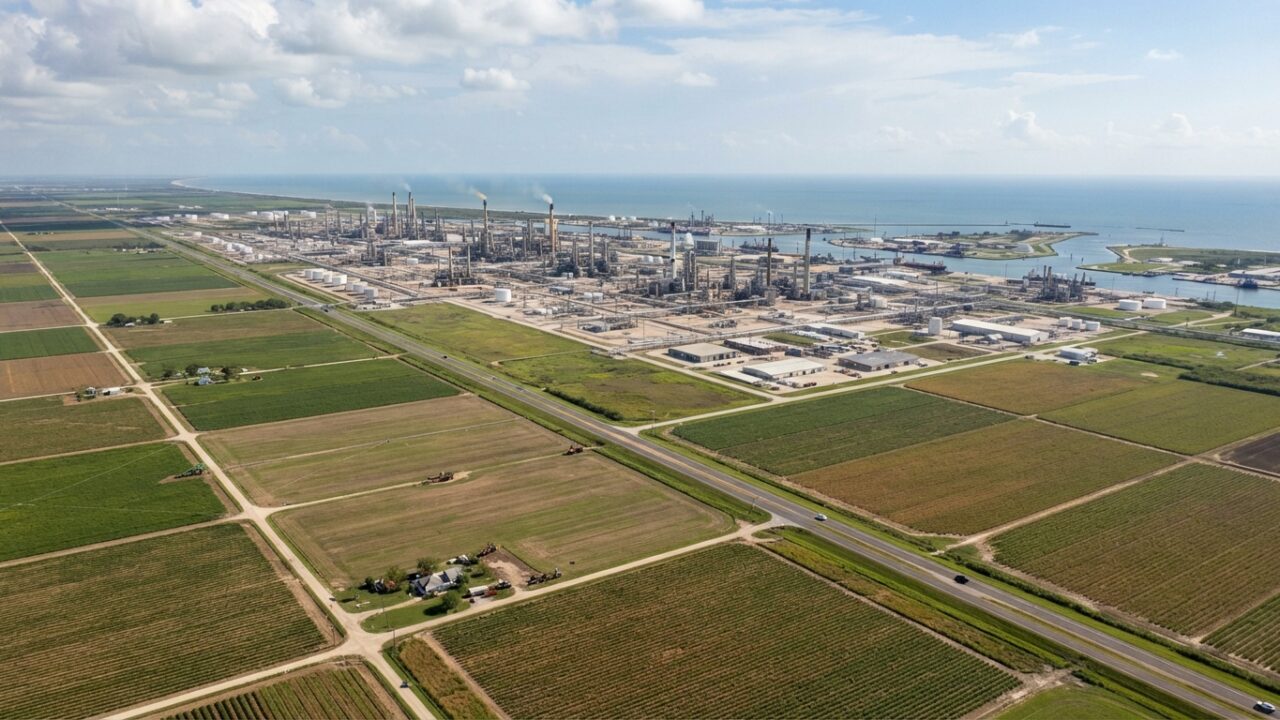
A $1.2 billion refinery is headed to South Texas, converting farmland into industrial infrastructure in a development that could reshape the region’s environmental and economic landscape. The project arrives as coastal communities balance growth pressures with preservation of the natural resources that draw visitors to barrier islands and Gulf waters.
The refinery announcement comes at a moment when South Texas coastal development faces increasing scrutiny. While new artificial reefs expand fishing opportunities offshore and water restrictions ease in Corpus Christi, this industrial expansion raises questions about how the region manages competing demands on land, water, and air quality.
What the Project Means for Coastal Resources
Refineries require substantial water resources for cooling, processing, and safety systems. In a region where Corpus Christi has only recently relaxed water restrictions after years of drought concerns, the addition of a major industrial water user creates uncertainty for both agricultural operations and municipal supplies.
The Texas coast depends on freshwater inflows to maintain the delicate balance of its bays and estuaries. These shallow bodies of water serve as nurseries for shrimp, redfish, speckled trout, and other species that support both commercial fishing and the recreational angling that brings visitors to Port Aransas, Rockport, and surrounding communities.
Any significant new water demand affects the flow reaching these critical habitats. Less freshwater entering bays increases salinity levels, shifts species composition, and can reduce the productivity of fishing grounds that sustain the coastal economy.
Air Quality Considerations for Outdoor Recreation
Refineries emit volatile organic compounds, nitrogen oxides, and particulate matter that affect air quality across considerable distances. Prevailing winds in South Texas typically blow from the southeast during summer months, carrying emissions inland, though winter northers reverse this pattern.
For visitors planning beach trips, kayaking excursions, or birding outings, air quality determines visibility, comfort, and even safety. The Gulf Coast attracts photographers seeking clear horizons and wildlife enthusiasts tracking migratory birds through critical stopover habitat along the Central Flyway.
Industrial emissions can create haze that obscures coastal views and irritates respiratory systems during outdoor activities. The region already contends with occasional air quality alerts from existing industrial facilities in Corpus Christi and other coastal cities.
Regulatory Framework and Permits
Texas refinery projects must obtain air quality permits from the Texas Commission on Environmental Quality, water discharge permits under federal Clean Water Act provisions, and various local approvals. The permitting process typically includes public comment periods, though the effectiveness of community input in shaping or stopping projects varies.
The state’s regulatory approach generally favors industrial development, with environmental reviews focused on compliance with minimum standards rather than comparison of alternatives or consideration of cumulative impacts from multiple facilities.
Federal oversight enters the picture when projects affect waters of the United States or endangered species habitat. The South Texas coast provides critical habitat for several threatened and endangered species, including Kemp’s ridley sea turtles, piping plovers, and whooping cranes.
Economic Trade-Offs for Coastal Communities
Refinery construction brings temporary employment and permanent operating jobs, along with property tax revenue for local governments and school districts. Proponents argue that industrial development diversifies the economy and provides higher-paying jobs than tourism or service sectors.
The counterargument focuses on what communities risk losing. Tourism generates billions in annual economic activity along the Texas coast, supporting restaurants, hotels, fishing guides, kayak outfitters, and countless small businesses that depend on visitors seeking beaches, wildlife, and outdoor recreation.
Property values near industrial facilities typically decline as buyers prefer locations with cleaner air, less noise, and lower perceived health risks. Coastal real estate markets thrive on access to natural amenities, and refineries fundamentally alter the character of surrounding areas.
Agricultural Land Conversion
The conversion of farmland to industrial use represents an irreversible change in land capability. Once soil is covered with concrete and processing equipment, returning it to agricultural production becomes economically impractical.
South Texas agriculture includes cattle ranching, cotton, grain sorghum, and various specialty crops adapted to the region’s climate. These operations provide not only food and fiber but also maintain open space that supports wildlife movement and natural drainage patterns.
As development pressure increases along the coastal corridor, each conversion makes remaining farmland more valuable and more vulnerable to the next development proposal. The cumulative effect gradually transforms the landscape from rural to industrial character.
What This Means for Visitors and Residents
Anyone who travels to the Texas coast for fishing, birding, or beach time has a stake in how the region develops. Industrial projects don’t respect boundaries—emissions travel, increased truck traffic affects road conditions, and changing land use patterns influence where wildlife can thrive.
The barrier islands from South Padre to Matagorda remain relatively undeveloped compared to mainland areas, but they depend on healthy bay systems that industrial development can compromise. Freshwater inflows, water quality, and air quality all affect the ecological productivity that makes coastal recreation possible.
For gear considerations, visitors to industrialized coastal areas should prepare for variability in conditions. Air quality apps become more important for planning outdoor activities. Water clarity may fluctuate more than in less developed areas, affecting sight fishing and underwater visibility for snorkeling or photography.
Monitoring and Advocacy
Several organizations track coastal development and environmental quality along the Texas Gulf Coast. The Texas Parks and Wildlife Department maintains water quality monitoring stations, fishing reports, and habitat assessments. Coastal conservation groups document changes and participate in regulatory proceedings.
Public comment periods for major projects provide opportunities for residents and frequent visitors to voice concerns about specific impacts. While individual comments rarely stop projects, documented concerns create records that matter if facilities later violate permits or cause unforeseen problems.
Broader Context of Texas Coastal Development
This refinery represents one project among dozens reshaping the Texas coast. Liquefied natural gas terminals, petrochemical plants, desalination facilities, and port expansions compete for space along the same shoreline that attracts tourists and supports commercial fishing.
The Texas coast spans more than 350 miles, but suitable deep-water port locations are limited. The same geographic features that create protected bays for navigation also create irreplaceable estuarine habitat. Every industrial project claims a piece of this finite resource.
Unlike states with comprehensive coastal zone management plans, Texas takes a project-by-project approach that makes cumulative impact assessment difficult. Each development proceeds through separate reviews without systematic consideration of how multiple projects together affect regional resources.
The outcome will determine whether future generations experience a Texas coast dominated by industrial infrastructure or one that preserves enough natural character to sustain the outdoor recreation economy. The $1.2 billion refinery moves the needle in one direction, with consequences extending far beyond the farmland where construction begins.
