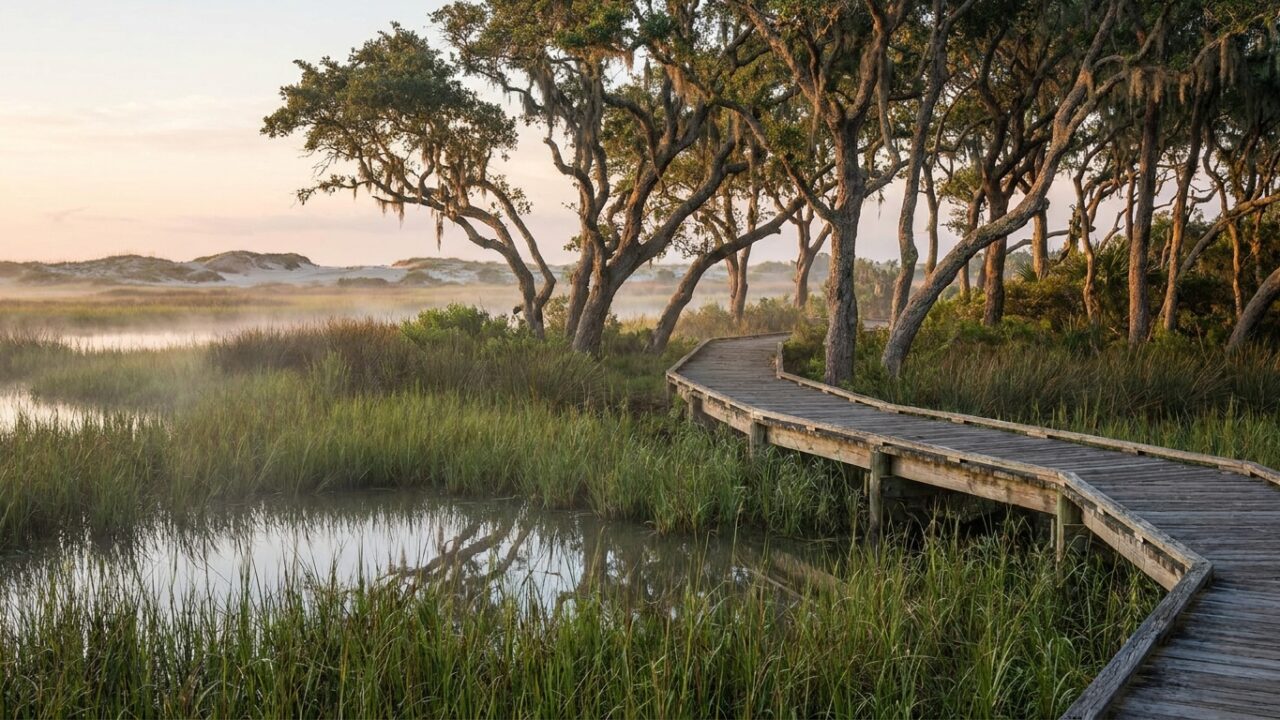
Every spring, the Texas coast becomes a critical landing zone for millions of birds traveling north along the Central Flyway. This major migration corridor stretches from Canada to the Gulf of Mexico, and the barrier islands around Port Aransas sit at a strategic pinch point where exhausted travelers make landfall after crossing open water.
Understanding the timing and geography of this phenomenon changes how you experience the coast in March, April, and May. Instead of happening upon a lone warbler, you position yourself where waves of species arrive predictably, driven by weather patterns older than human observation.
The Geography That Concentrates Birds
The Central Flyway narrows as it approaches the Gulf Coast. Birds flying north from the Yucatan Peninsula and crossing six hundred miles of open water reach the Texas shoreline desperate for rest, food, and shelter. The first land they encounter becomes critical habitat.
Port Aransas and the surrounding barrier islands offer exactly what arriving migrants need: protected woodlands, freshwater sources, and insect-rich vegetation within sight of the beach. This concentration effect means a single live oak motte can hold thirty species on a good morning.
Mustang Island, San José Island, and the mainland coastal parks form a network of stopover sites. Birds often make initial landfall on the islands, then move to mainland habitat if conditions allow. This pattern creates opportunities at multiple locations depending on wind direction and weather.
The Leonabelle Turnbull Birding Center in Port Aransas sits on a boardwalk system threading through wetlands that border residential areas. This mix of habitats within a compact space draws species from shorebirds to songbirds. The boardwalk keeps human activity predictable, and birds tolerate close observation.
Timing the Waves
Spring migration unfolds in overlapping pulses rather than a single event. Early migrants begin arriving in late February. Shorebirds and waterfowl move through first, followed by waves of neotropical songbirds that peak from mid-April through early May.
The most dramatic arrivals happen after weather events called fallouts. When migrating birds encounter strong headwinds or storms over the Gulf, they drop onto the first available land in concentrated numbers. A coastline that held fifty birds one morning can host thousands the next day after a front passes through.
Fallouts cannot be scheduled, but they follow patterns. South winds allow birds to overshoot the immediate coast and disperse inland. North winds push them down onto the barrier islands and beaches. A shift from south to north winds overnight, especially with rain or fog, creates ideal fallout conditions.
Checking marine forecasts becomes part of planning. When north winds of fifteen to twenty knots are predicted after several days of southerly flow, the chances of a significant arrival increase. Dawn on those mornings offers the best window, before birds rest and begin moving inland.
Early Season: February Through March
Shorebirds dominate early migration. Sanderlings, willets, and various sandpipers work the beach margins and mudflats. Reddish egrets hunt the shallows with their distinctive dancing technique. American white pelicans gather in rafts offshore before continuing north.
The beaches themselves become prime viewing zones during this period. Walking the wrack line at low tide puts you parallel to feeding birds. A spotting scope extends your range across the flats that appear at water’s edge.
Peak Migration: Mid-April Through Early May
This window brings the greatest diversity. Warblers, tanagers, orioles, grosbeaks, buntings, and thrushes arrive in overlapping waves. A single morning can produce forty species without moving between locations.
Wooded areas become the focus. Paradise Pond at the University of Texas Marine Science Institute, the nature trail at Port Aransas Park, and the oak mottes behind the primary dunes all concentrate songbirds. These birds feed actively after their Gulf crossing, often ignoring nearby observers.
Colors intensify as breeding plumage reaches its peak. Male painted buntings appear impossibly bright against live oak bark. Scarlet tanagers glow red among green leaves. Rose-breasted grosbeaks show black, white, and crimson patterns that seem artificial in their precision.
Where to Position Yourself
Certain locations consistently produce better results based on habitat structure and position relative to the coastline.
The Leonabelle Turnbull Birding Center offers year-round access and facilities. The boardwalk penetrates wetlands without disturbing them. Multiple viewing platforms provide different sight lines across ponds, marsh edges, and shrub zones. Sunrise visits avoid afternoon heat and catch birds at peak activity.
Charlie’s Pasture, a county park with coastal prairie and wetland edges, sits slightly inland where birds move after initial landfall. The habitat mix draws species that avoid pure beach environments. Walking the perimeter trail at dawn covers multiple zones efficiently.
The Convention Centre Nature Trail in Port Aransas threads through planted native vegetation that has matured into reliable habitat. Its position near the town center means it gets checked frequently, but also means current information circulates quickly among birders who share sightings.
San José Island requires boat access but receives less human pressure. Birds landing there spread across undeveloped habitat. Walking the island’s interior in April can produce encounters with tired migrants perched at eye level, too exhausted to flush at your approach.
Reading Behavior
Migrating birds act differently than residents. Understanding these patterns helps you find more birds and avoid disturbing them unnecessarily.
Fresh arrivals after Gulf crossings often feed low and move little. A warbler that would normally stay in the canopy might work through knee-high vegetation for the first hours after landfall. These birds tolerate close approach because feeding takes priority over caution.
Flocking behavior intensifies during migration. Species that winter or breed in loose association travel in mixed groups during passage. Finding one species often means others feed nearby. Scanning systematically when you spot movement reveals birds you would otherwise miss.
Vocalizations increase during migration despite birds being outside breeding territories. Flight calls help individuals maintain contact during nocturnal travel. Dawn often brings a pulse of calling as birds reorient after landing. Learning these calls multiplies the birds you detect.
Conditions That Matter
Weather shapes migration success more than calendar dates. Favorable conditions allow birds to pass through quickly. Challenging weather creates the concentrations that make viewing exceptional.
Cloud cover keeps nocturnal migrants flying lower, making them more likely to land at first light rather than continuing inland. Overcast mornings following clear nights often produce better birding than brilliant dawns after cloudy darkness.
Wind direction determines which habitats receive the most birds. West winds push migrants toward the eastern edges of the islands. East winds concentrate them on western shores and mainland sites. Positioning yourself downwind of open water improves your odds during active migration.
Temperature affects behavior after arrival. Cool mornings keep birds feeding actively longer. Heat sends them into shade by mid-morning, reducing visibility but concentrating them in predictable cover.
What to Bring
Binoculars matter more than any other equipment. Eight-power or ten-power magnification with decent light-gathering ability lets you identify distant birds and track movement through vegetation. Compact models reduce neck strain during long sessions.
A field guide specific to Texas or the Gulf Coast helps separate similar species. Migration brings birds in varied plumages—breeding adults, first-spring individuals, and lingering winter visitors—making identification more complex than it appears. Photo guides showing multiple angles work better than illustrated guides for quick reference.
Layered clothing handles morning cool and midday heat. Long sleeves protect against sun and biting insects that emerge in wetland areas. Neutral colors prevent you from standing out against vegetation, though migrating birds often ignore human presence entirely.
Water and snacks extend your time in productive spots. The best mornings keep you stationary for hours as different species cycle through. Leaving to address hunger or thirst means missing arrivals.
After the Peak
Migration tapers through late May but does not stop abruptly. Late migrants include species that nest farther north or at higher elevations. Flycatchers, vireos, and some warblers continue moving into early June.
Numbers decline, but individual birds become easier to study. With fewer species present simultaneously, you can focus on behavior, plumage details, and vocalizations without the overwhelming variety of peak weeks. Late season also brings juveniles from early southern nesters beginning their first movements.
The coastal habitat that supported millions of migrants returns to its summer residents. Birds that winter farther south have passed through. Species that breed locally settle into territories. The spectacle fades, but the knowledge of what moves through this narrow corridor each spring changes how you see every oak tree and beach margin from February forward.